

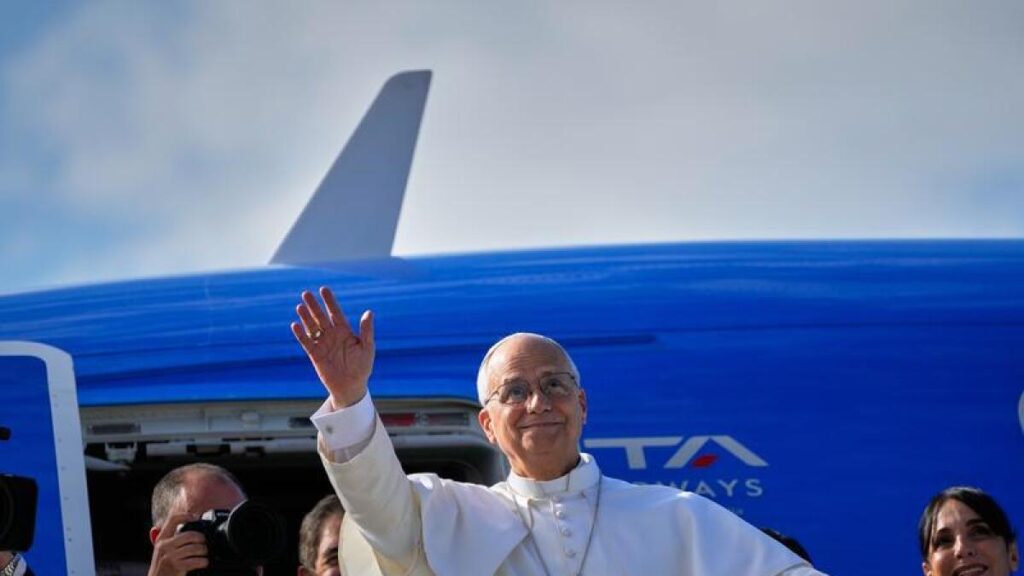
Pope Francis urged the Middle East to reject the “horror of war” during his recent visit to Lebanon, where he called for unity among religious leaders and political figures to foster peace. His remarks came as part of a broader appeal for reconciliation in a region marred by conflict, particularly following last year’s devastating war between Israel and Hezbollah.
The Pope, who is on a trip that began in Turkey, emphasized the need for new approaches to overcome long-standing political, social, and religious divisions. “The path of mutual hostility and destruction in the horror of war has been travelled too long,” he stated. “We need to change course. We need to educate our hearts for peace!”
During his three-day visit, the Pope met with various religious leaders and urged them to work together to heal Lebanon. He also addressed the international community, urging it to “spare no effort in promoting processes of dialogue and reconciliation” and imploring those in positions of power to “listen to the cry of your peoples who are calling for peace.”
Lebanese President Joseph Aoun welcomed the Pope’s message, promising that the country would embody the call for peace. “We have heard your message. And we will continue to embody it,” Aoun affirmed.
The Pope’s visit included poignant moments, such as his trip to a psychiatric hospital run by Franciscan nuns and a visit to the site of the 2020 Beirut port explosion. The blast, which killed more than 200 people, caused extensive damage and remains under investigation with no accountability for those responsible.
At the site, the Pope laid a wreath of flowers, greeting around 60 survivors and family members of the victims. He offered each person a rosary in a pouch featuring his coat of arms. One woman, visibly emotional, asked if she could hug him, to which he agreed, embracing her in a moment of shared grief.
In remarks at Beirut’s airport before departing for Rome, the Pope acknowledged the ongoing tensions in southern Lebanon, noting he could not visit the area due to “a state of conflict and uncertainty.” He expressed a desire for hostilities to cease, stating, “We must recognize that armed struggle brings no benefit.”
Crowds gathered to support the Pope during his Mass, many waving Vatican and Lebanese flags. Maroun al-Mallah, a 21-year-old landscape engineering student, expressed hope that the visit might signal a turning point for Lebanon. “It was lovely to know there was a sign of hope coming back to Lebanon,” he shared, reflecting on the challenges faced by the nation.
Pope Francis’s visit to Lebanon stands as a significant moment in his papacy, as he seeks to address the complexities of a region grappling with the consequences of conflict and the urgent need for peace.