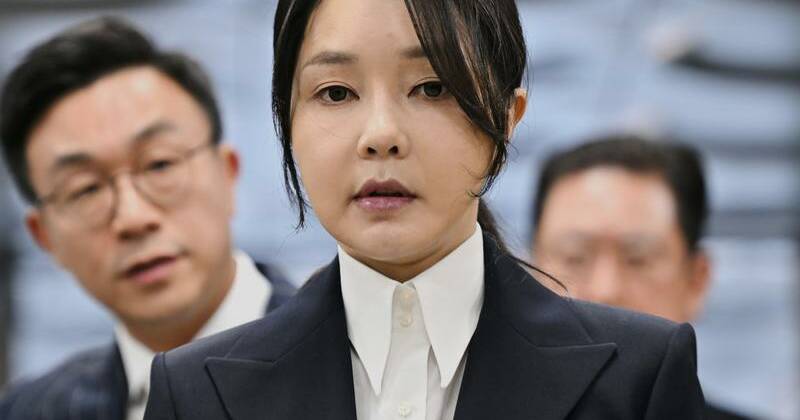
A South Korean court sentenced former First Lady Kim Keon Hee to one year and eight months in prison for accepting bribes. The ruling was delivered by the Seoul Central District Court, which found her guilty of corruption but cleared her of other serious charges, including stock price manipulation and violations of the political funds act.
This verdict follows a series of legal troubles surrounding Kim and her husband, former President Yoon Suk Yeol, who was ousted from office in April 2023. Prosecutors had sought a lengthy sentence of 15 years in prison and fines of 2.9 billion won (approximately $A2.9 million) for Kim, accusing her of receiving luxury items, including Chanel bags and a diamond necklace, from the Unification Church in exchange for political favours.
The court determined that there was insufficient evidence to support claims that Kim had manipulated stock prices or violated political funding laws. These allegations included accusations that she received opinion polls from a power broker in return for influencing candidate selections. Throughout the proceedings, Kim maintained her innocence regarding all charges.
As she entered the courtroom, Kim wore a dark suit and a face mask, remaining composed as the lead judge announced the verdict. Following the ruling, her legal team indicated they would evaluate their options for an appeal regarding the bribery conviction.
The Unification Church, from which Kim allegedly received gifts, stated that these items were given without any expectation of reciprocity. Its leader, Han Hak-ja, who also faces charges, has denied directing any bribes toward Kim.
The legal issues surrounding Yoon do not end with Kim’s conviction. He is currently facing eight trials linked to various charges, including insurrection, stemming from a failed attempt to impose martial law in December 2024. Recently, he appealed a five-year prison sentence handed down for obstructing law enforcement during this controversial period.
As these high-profile cases unfold, the implications for South Korean politics remain significant, particularly regarding public trust in leadership and accountability. The appeals process for both Kim and Yoon could further complicate the political landscape in a country still grappling with the fallout from their administration’s actions.