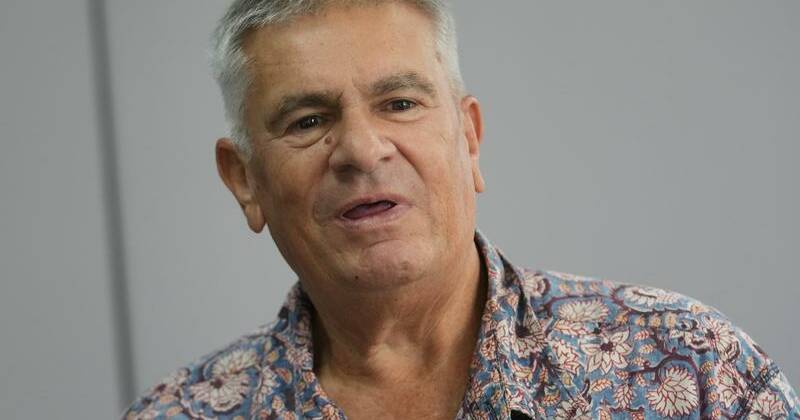
A defamation case against Australian writer Murray Hunter has been withdrawn from a Thai court following a mediation agreement. The Malaysian Communications and Multimedia Commission (MCMC) officially announced the cessation of legal proceedings on January 12, 2025, which had raised alarms among advocates for free speech due to its implications for cross-border repression.
Hunter faced legal action as a result of articles he published through his Substack newsletter. The Malaysian authority previously acknowledged the settlement, stating that both criminal and civil cases against Hunter had been dropped. This development has sparked concerns regarding the use of strategic lawsuits against public participation (SLAPPs) by the Malaysian government, which critics argue threatens the freedom of expression not only within Malaysia but also beyond its borders.
In a statement released in November, the international coalition IFEX condemned the Malaysian government’s approach. It expressed concern that the application of criminal defamation laws against individuals outside Malaysia serves to intimidate writers and artists, discouraging them from voicing opinions on matters of public interest. Prominent organizations, including PEN International, Human Rights Watch, and the Committee to Protect Journalists, have rallied against the arrest and treatment of Hunter, emphasizing the implications for press freedom.
While the mediation agreement remains confidential, Hunter shared that he retracted approximately ten articles and issued an apology as part of the resolution. The charges against him were formally dismissed by the Bangkok South Criminal Court, with no fines or penalties imposed. The defamation charge he faced carried a maximum prison sentence of two years and a fine of 200,000 baht (approximately $A9,079).
Hunter’s Substack newsletter has since been unblocked in Malaysia, allowing him to resume publishing content. Commenting on his release, he stated, “I’ve got my passport back and I’m free to travel again in the next couple of days.”
The writer was initially arrested on September 29, 2025, at Suvarnabhumi Airport in Bangkok while preparing to board a flight to Hong Kong. Following his arrest, he was detained overnight and released on bail of 20,000 baht (around $A908.73), with his passport confiscated during the legal proceedings.
Despite the resolution of the case, Hunter expressed dissatisfaction with the outcome, feeling that the legal process was unfair. He noted the ongoing threat posed by similar lawsuits and indicated his intention to remain in Thailand, where he is working on a book that explores the implications of such legal challenges.
His Thai lawyer, Akarachai Chaimaneekarakate, echoed Hunter’s concerns, asserting that the specter of transnational SLAPP lawsuits continues to loom over writers in Thailand. He emphasized that the legal process itself can serve as a form of punishment, impacting the ability of individuals to express dissenting opinions freely.
As the situation develops, the dialogue surrounding freedom of expression and the protection of journalists remains critical, with advocacy groups poised to monitor Malaysia’s legal landscape closely.