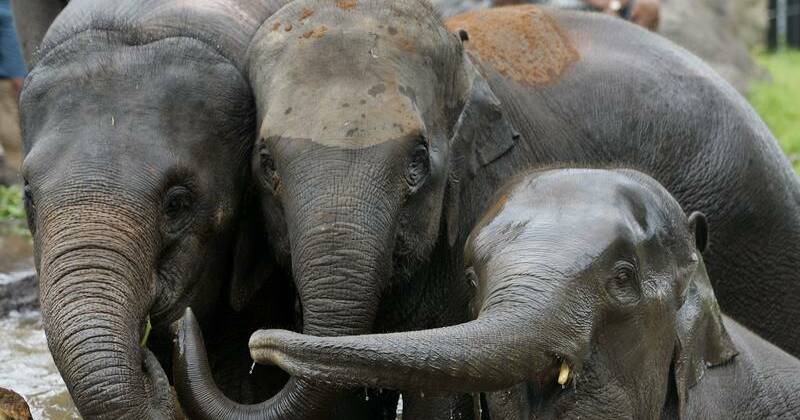
A tragic incident occurred on March 16, 2024, when a passenger train collided with a herd of wild Asiatic elephants in northeastern India, resulting in the deaths of seven elephants and injuring a calf. The high-speed Rajdhani Express, which was traveling from Sairang in Mizoram to New Delhi, struck the elephants as they crossed the tracks in a forested area approximately 120 kilometers southeast of Assam’s capital, Guwahati.
According to Indian Railways spokesman Kapinjal Kishore Sharma, the train driver spotted the herd of around 100 elephants early on Saturday morning and activated the emergency brakes. Despite these efforts, the train was unable to avoid hitting some of the animals. Following the collision, five coaches and the engine derailed, although no human casualties were reported.
Veterinarians conducted autopsies on the deceased elephants, which were later scheduled for burial. The incident highlights ongoing concerns regarding wildlife safety near railway tracks in Assam, a region that is home to an estimated 7,000 wild Asiatic elephants, one of the highest concentrations of elephants in India.
Indian Railways indicated that while the accident site is frequently traversed by elephants, it is not classified as an official elephant corridor. The Rajdhani Express was carrying approximately 650 passengers at the time of the incident. Following the derailment, railway officials successfully delinked the unaffected coaches, allowing the train to resume its journey to New Delhi. Passengers from the derailed coaches were transferred to another train headed for Guwahati.
The collision is part of a troubling trend; since 2020, there have been at least a dozen reported incidents of trains hitting elephants across Assam. Wild elephants often wander into agricultural areas during this time of year, drawn by the availability of food in rice fields nearing harvest.
The ongoing conflict between wildlife and infrastructure in Assam underscores the urgent need for measures to protect these majestic animals. As train speeds increase, the risk to elephants crossing tracks becomes more pronounced, raising concerns for both wildlife conservation and railway safety.