
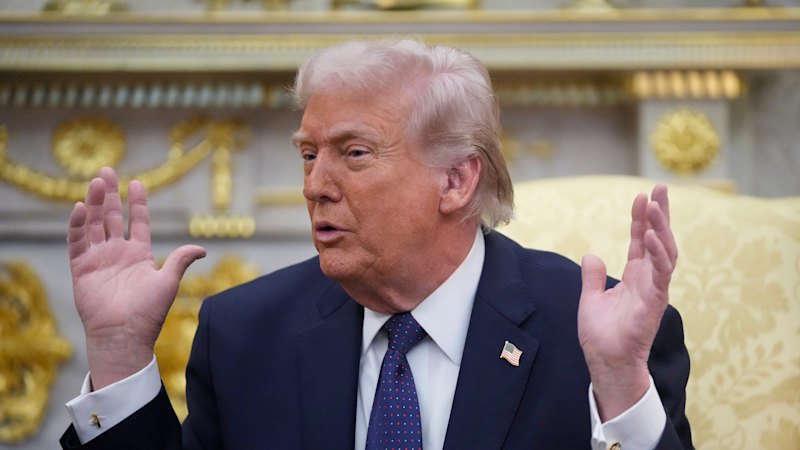
U.S. President Donald Trump has intensified his rhetoric against the UK’s Prime Minister Keir Starmer, stating that recent Israeli airstrikes on Iran have likely eliminated key candidates for its leadership. In a press conference on March 4, 2026, Trump denied that Israel had pressured him into launching these attacks, referring to Starmer as “not Winston Churchill” in a bid to underscore perceived weaknesses in British leadership.
Israeli forces targeted a compound in Tehran where influential Shia clerics were reportedly set to meet to discuss the selection of a new supreme leader, following the death of Ali Khamenei in earlier strikes. While the exact number of casualties remains unclear, an Israeli official stated that the timing of the strike was intentional, aiming to disrupt the leadership selection process. The Israeli Defense Forces announced on social media that the operation had successfully struck the “most senior forum” of the Iranian regime.
In his remarks, Trump noted that the recent military actions had effectively removed several potential successors to Khamenei. “Most of the people that we had in mind are dead,” he claimed, suggesting that the U.S. had maintained a list of preferred candidates. He expressed concern over the possibility of a new leader emerging who might prove just as problematic as the previous regime.
While discussing potential leadership options, Trump dismissed the idea of supporting exiled Reza Pahlavi, son of the former Shah of Iran, stating that a leader from within Iran might be more suitable. “We have people that were more moderate,” he added, emphasizing the need to conclude military operations before considering political solutions.
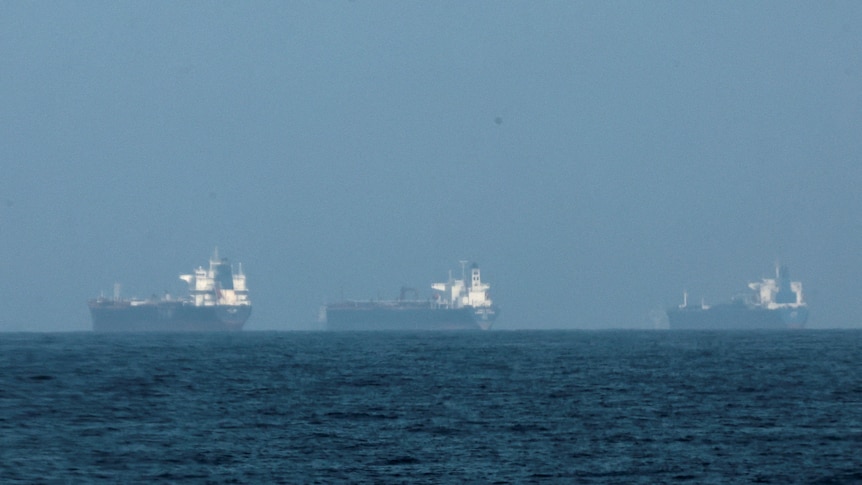
As the situation unfolds, Trump has ordered the U.S. Development Finance Corporation to provide free political risk insurance and to ensure the financial security of energy shipping in the Gulf region. He also stated that the U.S. Navy would escort oil tankers through the Strait of Hormuz, if necessary, reinforcing the U.S. commitment to maintaining the flow of energy to the global market.
Trump declared that Iran had been “decimated” but did not clarify the expected duration of military operations. Previous estimates from the president ranged from two to six weeks, although he suggested that U.S. military resources could sustain operations indefinitely. Tensions regarding the strikes have arisen amidst ongoing negotiations between the U.S. and Iran, mediated by Oman.
Secretary of State Marco Rubio indicated that the strikes were triggered by an “imminent threat” posed by Iran, which he claimed was preparing to retaliate against U.S. bases. Trump countered assertions that Israel compelled U.S. involvement, stating, “I might have forced their hand.”
Further complicating matters, Trump criticized Spain and the UK for their reluctance to support U.S. military operations. While Starmer ultimately permitted the use of British bases for defensive purposes, he raised concerns about potential breaches of international law. Trump remarked, “It’s taken three, four days to work out whether we can land there,” expressing frustration at the delays.
In a meeting with German Chancellor Friedrich Merz, Trump described Spain as “terrible” and “unfriendly,” hinting at a potential withdrawal of U.S. trade relations with the country. He suggested that U.S. forces could utilize Spanish military installations without permission, reflecting a growing impatience with allied cooperation.
As the military campaign enters its fourth day, the implications of these actions on international relations remain to be seen, particularly concerning the U.S.’s standing in the Middle East and its alliances in Europe.