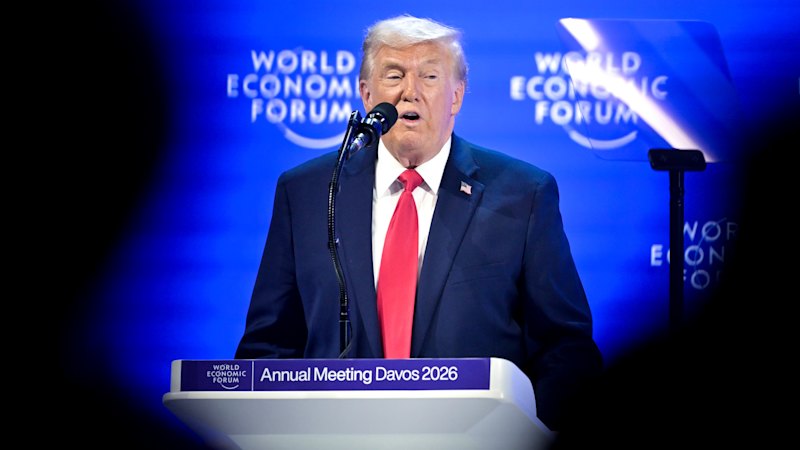
During a speech at the World Economic Forum in Davos on January 23, 2020, US President Donald Trump addressed his controversial interest in Greenland, stating he would not resort to force to claim the territory. This statement comes amid ongoing discussions about the strategic and economic significance of the Arctic region.
While emphasizing a peaceful approach, Trump reiterated his administration’s desire for ownership of Greenland, a territory currently governed by Denmark. He warned that the United States would “remember” if it did not achieve its objectives regarding the acquisition. His remarks reflect a broader strategy aimed at expanding American influence in the Arctic, an area rich in natural resources and crucial for geopolitical interests.
The president’s comments have reignited debates about international relations and territorial claims. In 2019, Trump made headlines when he expressed interest in purchasing Greenland, prompting a swift rejection from Danish officials. Despite this dismissal, the idea has gained traction among some supporters who view it as a strategic necessity.
In his Davos address, Trump framed the acquisition of Greenland within the context of economic opportunities, stating that the territory holds vast resources, including minerals and potential shipping routes. The Arctic region is increasingly becoming a focal point for global powers, with nations vying for access to its untapped resources in the face of climate change.
Greenland has been experiencing significant changes as ice melts, revealing new opportunities for exploration and development. As countries assess their interests in the area, Trump’s remarks underscore a growing urgency among world leaders to secure their positions in the Arctic.
The response to Trump’s comments has been mixed. Some analysts argue that his approach could lead to heightened tensions with Denmark and other Arctic nations. Others suggest that a collaborative approach is necessary to address the challenges posed by climate change and resource management in the region.
As the conversation around Greenland continues, it remains to be seen how the United States will navigate its interests while maintaining diplomatic relations. The dynamics of international politics in the Arctic will likely evolve as more countries recognize the importance of this strategic territory.
Trump’s insistence on the ownership of Greenland highlights the complexities of territorial claims in an increasingly interconnected world. As nations grapple with the implications of climate change and resource competition, the future of the Arctic remains a critical area of focus for global leaders.