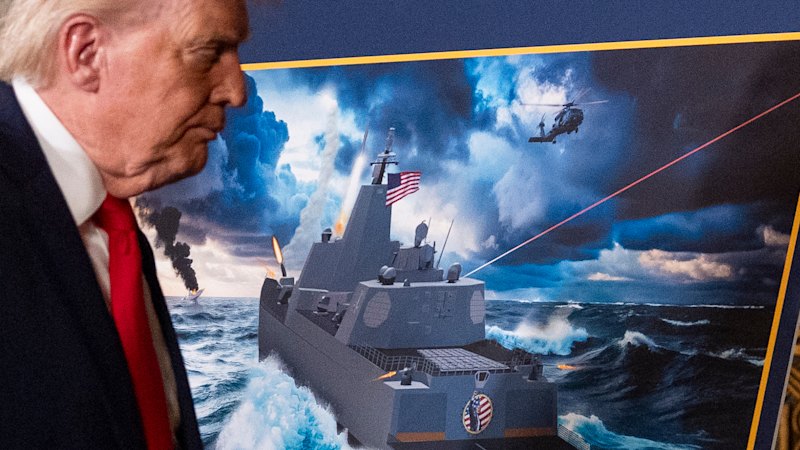
The United States Navy is considering the commissioning of a new class of battleships named after former President Donald Trump, as part of an ambitious effort to modernize its fleet. This proposal aims to expand naval capabilities in response to growing competition from the People’s Republic of China, which currently boasts a fleet of approximately 400 ships. The announcement comes as the U.S. seeks to reassert its position as a dominant maritime power.
The proposed “Trump-class” battleships are designed to be heavily armed and significantly larger than any existing surface combatants. Trump claims these vessels will be “100 times more powerful” than previous iterations, indicating a significant leap in military technology. Speaking about the initiative, he stated, “They’ll help maintain American military supremacy, revive the American shipbuilding industry and inspire fear in America’s enemies all over the world.”
Challenges and Controversies Surrounding the Proposal
Despite the grand vision, the plan faces numerous challenges. Critics have pointed out that the proposed battleship design contradicts contemporary naval strategies that emphasize speed and versatility over the traditional battleship model. Modern naval doctrine increasingly prioritizes the use of high-speed missiles, drones, and advanced sensors, rather than concentrating firepower in large, heavily armored vessels.
The financial implications are substantial. Each battleship is estimated to cost around $13.4 billion, a figure that raises questions about the allocation of resources within the Navy. With the current fleet consisting of about 300 vessels, the U.S. has struggled to maintain its maritime presence since the mid-20th century, particularly in the face of China’s rapid naval expansion.
Moreover, naming a class of ships after a living individual deviates from long-standing naval traditions, which typically avoid such practices. This move has sparked debate among military historians and naval experts, many of whom argue that it undermines the dignity and legacy of naval naming conventions.
The Historical Context and Future Implications
The U.S. Great White Fleet’s historic visit to Sydney Harbour in August 1908 marked a pivotal moment in American naval history, symbolizing the nation’s emergence as a global maritime force. In contrast, the proposed “Trump-class” battleships evoke a nostalgia for the past, a time when battleships were the cornerstone of naval power. However, the landscape of naval warfare has evolved significantly since those days.
Naval warfare now favors dispersed and agile fleets capable of rapid response. The emphasis has shifted to adaptability, with modern vessels designed to operate in a networked environment where information and communication are paramount. Many experts believe that pursuing a battleship-centric strategy may divert critical funding from developing more effective naval technologies.
As discussions around the “Trump-class” battleships continue, the credibility of the initiative remains in question. The design and construction of such ships would take years, and there is skepticism about whether they will ever come to fruition. The economic and logistical hurdles, coupled with the evolving nature of naval warfare, suggest that this ambitious plan may never set sail.
In summary, while the proposal for the “Trump-class” battleships reflects a desire to re-establish U.S. naval dominance, it also raises significant concerns about practicality, tradition, and the future direction of naval strategy.