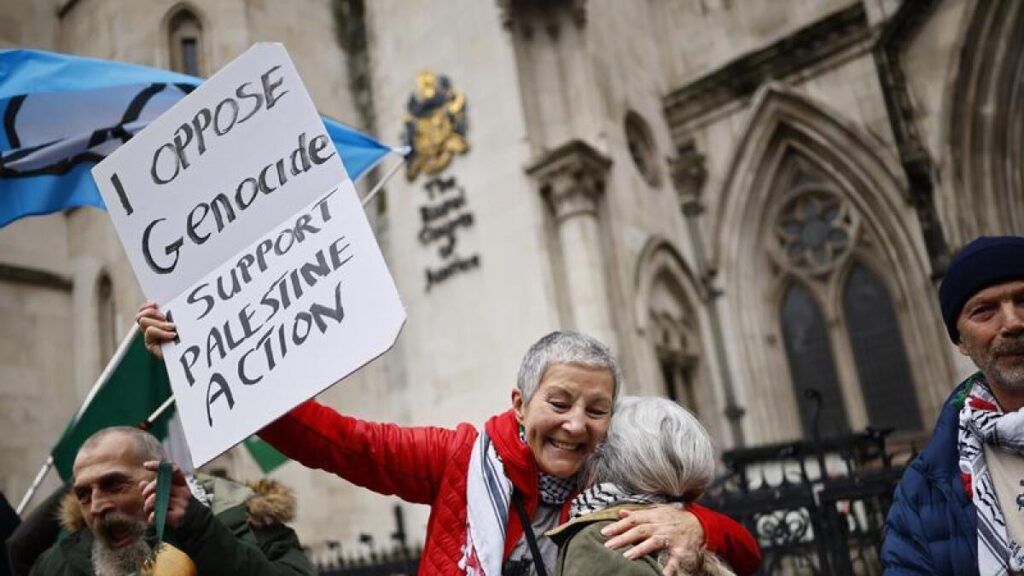
A UK court has declared the government’s decision to classify the group Palestine Action as a terrorist organization unlawful. The judges determined that the move was “disproportionate,” marking a significant legal victory for the pro-Palestinian group.
Huda Ammori, co-founder of Palestine Action, hailed the ruling as a “monumental victory” for fundamental freedoms in the UK and a critical moment in the ongoing struggle for Palestinian rights. She described the government’s decision as one of the most severe attacks on free speech in recent British history.
In contrast, Shabana Mahmood, the Home Secretary, expressed her disappointment with the court’s ruling, stating that she disagreed with the notion that the ban was disproportionate. Mahmood announced her intention to appeal the judgment in the Court of Appeal, emphasizing the government’s commitment to combating terrorism.
The UK government designated Palestine Action as a terrorist organization in 2025, alongside groups such as al-Qaeda and Hamas. This designation made membership or support for the group a criminal offense, punishable by a prison term of up to 14 years. Since the ban, over 2,000 individuals have reportedly been arrested for displaying signs supporting Palestine Action, raising concerns among supporters and civil liberties groups about the implications for free speech and the right to protest.
The government’s ban followed a direct action protest in June 2023, where activists from Palestine Action broke into a Royal Air Force base to demonstrate against British military support for Israel’s operations in Gaza. During the protest, activists caused significant damage, spraying red paint on two tanker planes and using crowbars to inflict further harm. The UK government maintains that the group’s activities have resulted in millions of pounds in damages, impacting national security.
In their ruling, the judges acknowledged that while some actions by Palestine Action may have constituted terrorist behavior, the existing criminal law provides sufficient means to prosecute individuals involved without the need for a proscription. This perspective underscores a growing debate about the balance between national security and civil liberties.
As the UK government prepares to challenge the court’s decision, the outcome could have far-reaching implications for the ongoing discourse surrounding protest rights and the treatment of political activism in the country.