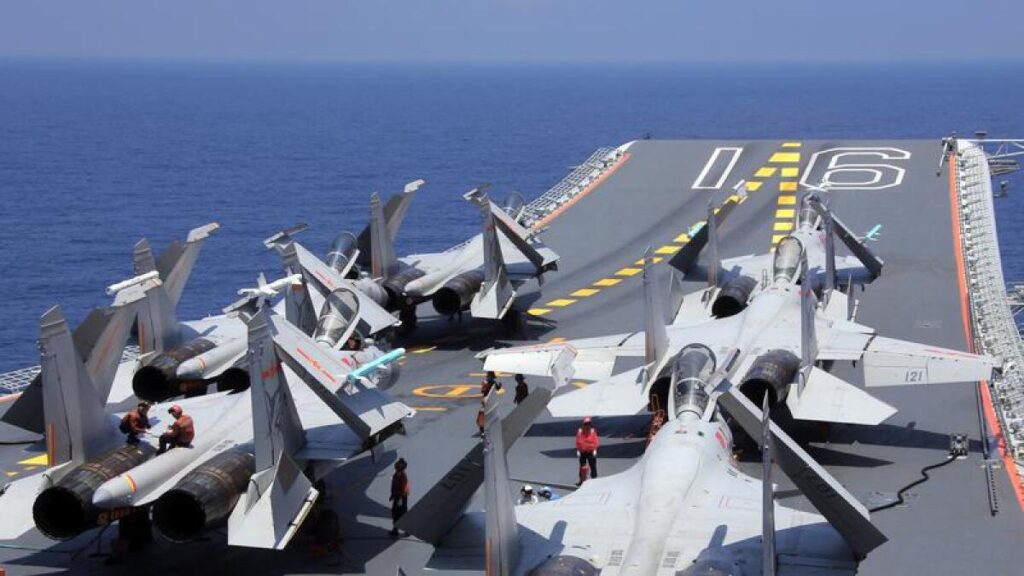
The United States has reaffirmed its commitment to Japan in light of escalating tensions with China over a recent radar incident involving Chinese fighter jets. The incident has raised alarms due to its implications for regional security, particularly concerning the strategically significant Taiwan Strait, located approximately 100 kilometers from Japanese territory.
A spokesperson from the US State Department stated late on Tuesday, “China’s actions are not conducive to regional peace and stability.” This statement followed reports of Chinese military maneuvers that have drawn scrutiny from both Japan and the US. The spokesperson emphasized that “the US-Japan Alliance is stronger and more united than ever.” They further assured that the US remains in “close contact” with Japan regarding this and other pressing issues.
Japan Responds to Chinese Tensions
Japanese Chief Cabinet Secretary Minoru Kihara welcomed the US statement, interpreting it as a demonstration of the robust US-Japan alliance. On the same day, Japan scrambled its jets to monitor joint patrols conducted by Russian and Chinese air forces in the vicinity of its territory.
In a concerning development, Japan’s coast guard reported spotting four Chinese coast guard vessels near the disputed Senkaku Islands in the East China Sea, which Japan administers but China also claims. According to China, these operations are part of a “legal” effort to safeguard its rights and interests in the region.
The radar incident involving Chinese fighter jets aiming at Japanese planes marks one of the most serious confrontations between these East Asian militaries in years. Such actions are viewed as provocative, as they could signal the potential for an attack and may compel the targeted aircraft to take evasive actions. Japan has strongly criticized these maneuvers as dangerous and escalatory.
Regional Reactions and Broader Implications
In a separate statement, Chinese foreign ministry spokesman Guo Jiakun refrained from directly addressing the US comments but reiterated that China’s military training and exercises comply with international law and are conducted safely. He remarked, “We hope that the international community can tell right from wrong and not be hoodwinked by the Japanese side.” His comments included a warning to Japan’s allies to remain vigilant and avoid manipulation.
On Wednesday, Taiwan’s President Lai Ching-te criticized China’s military drills, describing them as “very inappropriate behaviour.” He called on China to act responsibly, asserting, “Peace is priceless; war has no winners. Peace must be fostered by all parties, and China shares this responsibility.”
Tensions between Japan and China have escalated significantly since remarks made by Japanese Minister Takaichi in November 2023, when she stated that a Chinese attack on Taiwan could constitute a “survival-threatening situation” for Japan, potentially prompting a military response. In reaction, Beijing has called for Takaichi to retract her statement, accusing Tokyo of military threats and advising its citizens against travel to Japan.
The ongoing situation highlights the delicate balance of power in East Asia and the implications of military posturing in the region, underlining the necessity for diplomatic engagement to ensure stability and peace.