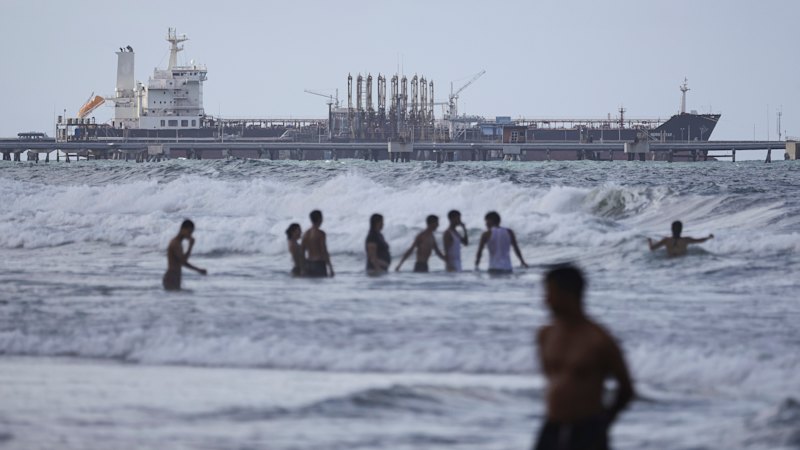
The United States has seized another vessel in international waters off the coast of Venezuela, according to three US officials. This operation follows a recent announcement from President Donald Trump regarding a “blockade” of all sanctioned oil tankers entering and leaving Venezuela. This incident marks the second seizure in recent weeks and occurs amidst a significant military buildup by the US in the region.
Details regarding the specific location of the operation were not disclosed, but officials indicated that the US Coast Guard led the action. The Coast Guard and the Pentagon referred inquiries to the White House, which has not yet responded to requests for comment. Venezuela’s oil ministry and its state oil company, PDVSA, also did not provide immediate feedback on the situation.
On March 15, 2024, President Trump stated on social media, “I am ordering a TOTAL AND COMPLETE BLOCKADE OF ALL SANCTIONED OIL TANKERS going into, and out of, Venezuela.” Following the seizure of a sanctioned oil tanker last week, an effective embargo has been implemented, causing loaded vessels carrying millions of barrels of oil to remain in Venezuelan waters to avoid potential capture.
Since the initial seizure, Venezuelan crude exports have experienced a significant decline. While some vessels continue to pick up oil in Venezuela, others transporting oil from Iran and Russia have not been sanctioned. Companies like Chevron operate under their own authorizations to transport Venezuelan oil.
China remains the largest buyer of Venezuelan crude, accounting for approximately 4 percent of its imports. Analysts report that shipments from Venezuela are expected to average more than 600,000 barrels per day in December 2024. Currently, the oil market appears well-supplied, with millions of barrels of oil on tankers off the coast of China awaiting offloading. Should the embargo remain in effect for an extended period, the loss of nearly 1 million barrels per day in crude supply could elevate oil prices.
Since the imposition of energy sanctions on Venezuela in 2019, traders and refiners purchasing Venezuelan oil have relied on a so-called “shadow fleet” of tankers that obscure their locations. This fleet includes vessels sanctioned for transporting Iranian or Russian oil, and shipping analysts note that this shadow fleet is at risk of punitive measures from the US. As of this week, more than 70 oil tankers are reported to be in Venezuelan waters as part of this fleet, with approximately 38 vessels under US Treasury sanctions, including at least 15 loaded with crude and fuel, according to data from TankerTrackers.com.
The US military presence in the region has intensified, with reports of over two dozen military strikes on vessels in the Pacific Ocean and Caribbean Sea near Venezuela, resulting in at least 100 fatalities. President Trump has also indicated the possibility of land strikes against Venezuela.
Venezuelan President Nicolas Maduro has accused the US of escalating military tensions with the goal of toppling his government and seizing control of the nation’s vast oil resources, which hold the world’s largest crude reserves. As the situation unfolds, the international community continues to monitor the impact of these actions on global oil markets and regional stability.