Woody Allen has expressed no regret regarding his past friendship with Jeffrey Epstein, despite the controversies surrounding the convicted sex offender. In a series of recent interviews, Allen described Epstein as “charming and personable,” reflecting on their social interactions over several years. This comes during a notable period for the filmmaker, who recently published his first novel, What’s With Baum?, turned 90, and mourned the passing of his close friend and muse, Diane Keaton.
The filmmaker and his wife, Soon-Yi Previn, were regular guests at Epstein’s Upper East Side townhouse, located near their own residence in New York City. In a letter celebrating Epstein’s 63rd birthday, Allen remarked, “Always accept. Always interesting,” regarding the dinners he attended. These revelations have reignited discussions about Allen’s moral standing, particularly given the allegations made against him by his former partner, Mia Farrow, claiming he sexually abused their daughter, Dylan. Allen has consistently denied these allegations, which have never led to criminal charges.
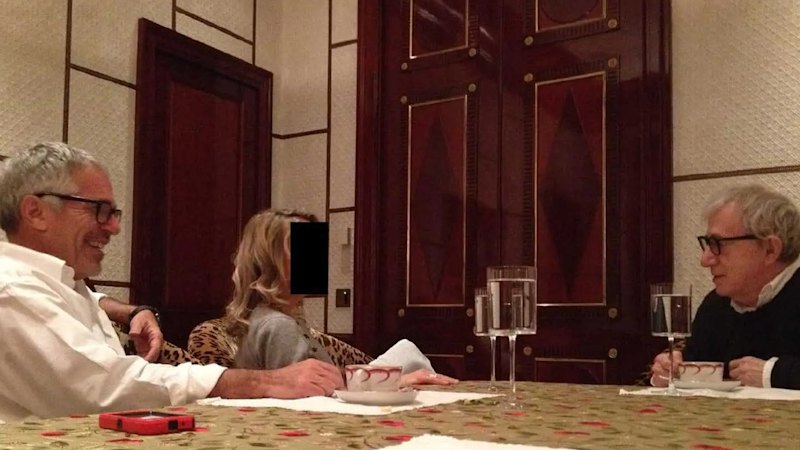
Recent images released by the House Oversight Committee Democrats show Allen and Epstein in intimate settings, prompting renewed scrutiny. One photograph captures the two men seated together at a table, with coffee cups and water glasses present. Another image depicts Allen on a film set, looking up at Epstein, who appears to be observing a monitor. These snapshots reveal a closer relationship than previously understood.
In contrast to Allen’s perspective, former Harvard president Larry Summers publicly expressed regret for his associations with Epstein after emails revealing their correspondence were made public. When questioned by a reporter from The Sunday Times, Allen offered no similar expression of remorse, instead labeling Epstein as “a substantial character.” He recounted how their dinners included a mix of “illustrious people, college professors, scientists, Nobel laureates,” painting a picture of a vibrant social circle.
Epstein’s past, including his conviction for soliciting sex from minors, raises questions about Allen’s judgment. He began visiting Epstein’s residence in 2010, shortly after Epstein’s sentencing. Allen appears to have disregarded potential concerns about Epstein’s criminal history, focusing instead on the engaging company that surrounded him at these gatherings.
Allen’s reflections reveal a complex narrative. Throughout his career, he has explored themes of deceit and moral ambiguity in films such as Crimes and Misdemeanours and Match Point, where characters evade consequences for their actions. The dynamic of his connection with Epstein may have provided Allen not only with social capital but also inspiration for his artistic endeavors.
As the fallout from these revelations continues, the public and critics alike are left to ponder the implications of Allen’s relationships and the broader conversation about accountability in the face of moral failures. The images and statements serve as a reminder of the intricate ties between personal friendships and societal judgments, especially within the realm of influential figures in entertainment.