



A council opposing Yemen’s Houthi rebels has expelled the leader of a separatist movement, accusing him of treason. This decision follows his reported refusal to attend negotiations in Saudi Arabia. The announcement was made by the Presidential Leadership Council and disseminated through the SABA news agency, which is aligned with anti-Houthi forces.
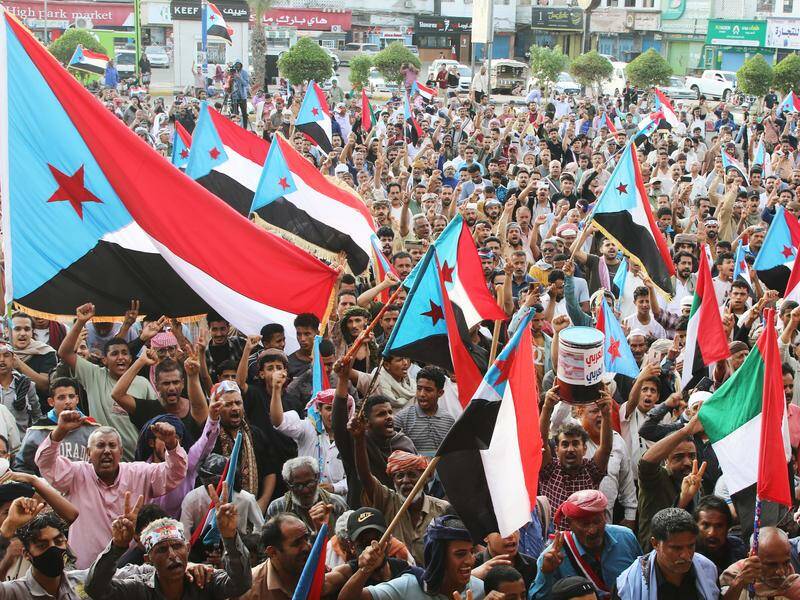
The situation escalates existing tensions between Saudi-backed forces and the Southern Transitional Council (STC), which has received support from the United Arab Emirates. The current whereabouts of STC leader Aidarous al-Zubaidi remain unclear, and the council has yet to issue a statement regarding the expulsion.
According to Major General Turki al-Malki, a spokesperson for the Saudi-led coalition, al-Zubaidi was scheduled to board a flight to Saudi Arabia but did not join other council officials. Al-Malki further indicated that intelligence reports suggested al-Zubaidi had mobilized a significant force, which included armored vehicles, combat units, and a substantial cache of weapons and ammunition. He stated that al-Zubaidi “fled to an unknown location.”
In recent weeks, Saudi Arabia has intensified its military operations against STC positions, including airstrikes targeting what was claimed to be a shipment of Emirati weapons. This military pressure comes in the wake of an ultimatum from anti-Houthi forces demanding a withdrawal of UAE troops from Yemen. On March 9, 2024, the UAE announced that it had pulled its forces from the region.
The rising tensions have not only impacted the conflict dynamics in Yemen but have also strained relations between Saudi Arabia and the UAE. Both nations, while ostensibly united in their efforts against the Iranian-backed Houthi rebels, have experienced friction over economic interests and regional political power, particularly in the strategically significant Red Sea area.
The conflict in Yemen has persisted since 2014, when the Houthis seized control of the capital, Sanaa. The ongoing strife has drawn in various regional actors, creating a complex web of alliances and hostilities that continues to evolve. As the situation unfolds, the implications for regional stability and humanitarian conditions in Yemen remain critical concerns for international observers and stakeholders.