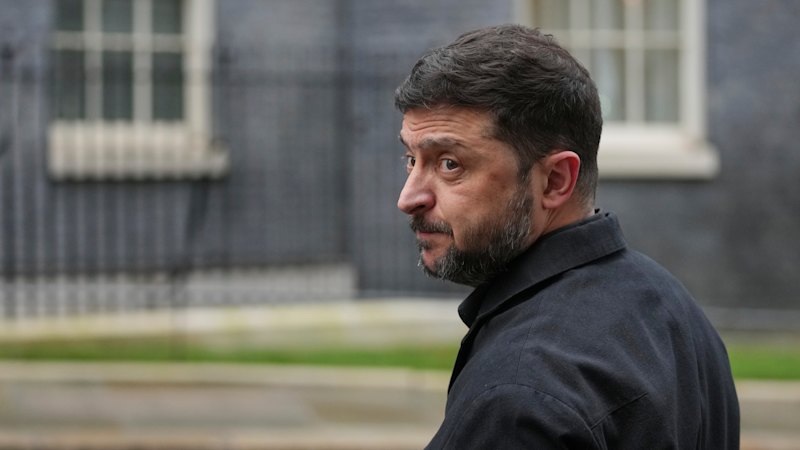
Ukrainian President Volodymyr Zelensky announced a willingness to withdraw troops from eastern Ukraine’s Donbas region as part of a peace strategy, contingent on a similar pullback by Moscow. This plan aims to establish the area as a demilitarized, free economic zone overseen by international forces. Zelensky’s comments signal a potential shift in Ukraine’s stance on negotiations with Russia, especially regarding the ongoing conflict that has persisted since 2014.
During a press briefing, Zelensky detailed a 20-point plan developed by negotiators from Ukraine and the United States in Florida. He emphasized that while discussions are ongoing, this represents the most significant indication of compromises he is prepared to consider concerning the Donbas, a region that has long been a focal point of contention. The situation surrounding the Zaporizhzhia nuclear power plant, currently under Russian control, may also be addressed through similar arrangements.
Moscow has not shown any inclination to agree to troop withdrawals. Instead, Russian officials demand that Ukraine relinquish control of the remaining territories in the Donbas, which includes most of Luhansk and approximately 70 percent of Donetsk. Zelensky has firmly rejected this ultimatum.
Kremlin spokesperson Dmitry Peskov stated that Russia’s position would depend on information from presidential envoy Kirill Dmitriev, who met with US officials in Florida over the weekend. However, Peskov did not offer further details on Russia’s response to Zelensky’s proposal.
The Biden administration has engaged in extensive talks with both Ukraine and Russia. Following a plan presented by former President Donald Trump to resolve the conflict, Ukraine and its European allies have worked to align the proposal more closely with Kyiv’s interests. Zelensky noted that determining control over the Donbas is “the most difficult point” in the negotiation process.
In discussions concerning the Zaporizhzhia nuclear site, the US has suggested forming a consortium involving Ukraine and Russia, granting each party an equal stake. Zelensky countered with a proposal for a joint venture primarily led by the US, allowing American officials to decide how to allocate the energy produced, including potential distributions to Russia.
Despite lengthy discussions that spanned over 15 hours, Zelensky acknowledged that consensus on the nuclear plant’s operation remains elusive. He expressed skepticism regarding the viability of joint commercial efforts with Russia, given the ongoing hostilities.
Zelensky highlighted the necessity for international forces to monitor the establishment of a free economic zone in the Donbas, ensuring compliance with any agreements reached. He suggested that these forces would be stationed along the contact line to prevent unauthorized military incursions.
The proposed plan includes a withdrawal of Russian forces from several regions, including Dnipropetrovsk, Mykolaiv, Sumy, and Kharkiv. Zelensky stated that the occupied city of Enerhodar, the closest urban area to the nuclear facility, should also become a demilitarized economic zone.
The current draft ensures that Ukraine would receive robust security guarantees, akin to NATO’s Article 5, stipulating that an attack on one member would necessitate a collective response. Zelensky indicated that a separate document outlining these guarantees would be finalized concurrently with the primary peace agreement.
The negotiation draft also includes provisions to maintain Ukraine’s military strength at 800,000 personnel during peacetime and establishes a timeline for Ukraine’s potential accession to the European Union. Limiting the size of Ukraine’s military has been a key demand from Russia throughout the conflict.
Zelensky remains optimistic about the progress made but acknowledges the complexities involved in reaching a lasting resolution. He stated, “The mood of the United States of America is that this is an unprecedented step towards Ukraine on their part,” reflecting the high stakes and challenges that lie ahead in the ongoing negotiations for peace.