



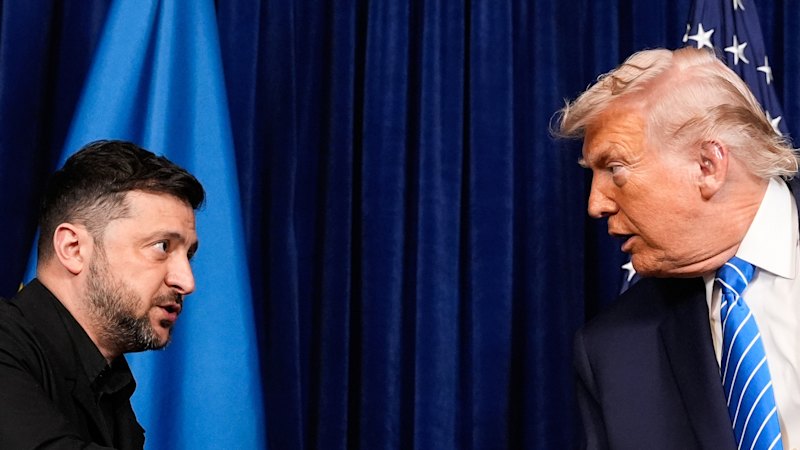
Ukrainian President Volodymyr Zelensky has called for extended security guarantees from the United States during ongoing peace negotiations aimed at ending the conflict with Russia. Zelensky expressed his desire for a guarantee lasting up to 50 years to deter any future aggression from Moscow, as discussions with US President Donald Trump progress.
In a recent audio message, Zelensky revealed that the current proposals on the table suggest a 15-year security agreement, with the possibility of extending it. He emphasized the need for a more robust commitment, stating, “We would like to consider the possibility of 30, 40, 50 years, and then it will be a historic decision by Trump.” This call for extended guarantees is part of a broader framework that includes pledges from nations within the so-called Coalition of the Willing, which Zelensky believes would offer effective protection for Ukraine.
Details of the Security Framework
Zelensky indicated that these US guarantees would be complemented by European Union membership for Ukraine, which he views as critical for the nation’s security. He outlined that monitoring of any ceasefire would be managed by international partners, ensuring comprehensive technical oversight and presence. “All these details will be in the security guarantees,” he noted.
The discussions between Zelensky and Trump took place at the latter’s Mar-a-Lago resort in Florida, where both leaders acknowledged the progress made but also recognized that significant issues remain unresolved. Key disputes include the status of eastern Ukrainian territories and the fate of the Zaporizhzhia nuclear power plant, which is currently occupied by Russian forces.
Zelensky confirmed that no consensus was reached regarding Russian President Vladimir Putin’s demands for Ukraine to withdraw from the contested Donbas region. Uncertainties linger over US proposals for establishing a demilitarized zone or a free economic zone in eastern Ukraine, including governance of the territory.
Trump expressed optimism about nearing a deal, stating that it could be “getting a lot closer,” though he cautioned that a resolution might still take several weeks. Zelensky described the peace plan as “90 percent agreed,” highlighting the momentum of ongoing discussions.
Future Meetings and Negotiation Dynamics
Following their meeting, Zelensky and Trump communicated with European leaders to align their strategies. The Kremlin announced that Putin and Trump would engage in another phone call “very soon,” as Dmitry Peskov, the Kremlin spokesperson, confirmed this development to reporters.
Zelensky mentioned plans for a meeting with European partners and Trump in January 2024, alongside a separate discussion with Russian officials. The Coalition of the Willing is scheduled to convene early in January to reaffirm its support for Ukraine, as stated by French President Emmanuel Macron.
Despite nearly a year of diplomatic efforts to resolve the conflict, significant challenges remain. Trump has indicated he would meet with Zelensky and Putin again only if an agreement appears imminent. Currently, negotiations have largely involved Trump’s envoys, including Steve Witkoff and Jared Kushner.
Zelensky reiterated Ukraine’s stance on negotiations, expressing that the format is less important than tangible actions from Putin. “These actions do not coincide with the peaceful vocabulary that he uses in dialogue with the US president,” he remarked, underscoring the need for substantive progress.
The ongoing conflict, now in its fourth year, has seen both sides adjust their positions as they navigate the complexities of war and diplomacy. As Ukraine seeks to refine a draft peace plan originally proposed by the US, it remains a contentious process, with Russia insisting on terms that include guarantees against NATO’s eastward expansion and clarity on Ukraine’s military posture post-conflict.
Zelensky’s push for long-term security guarantees reflects Ukraine’s urgent need for reassurances as it faces ongoing threats from Russia, with the outcome of these negotiations likely to shape the future of European security.