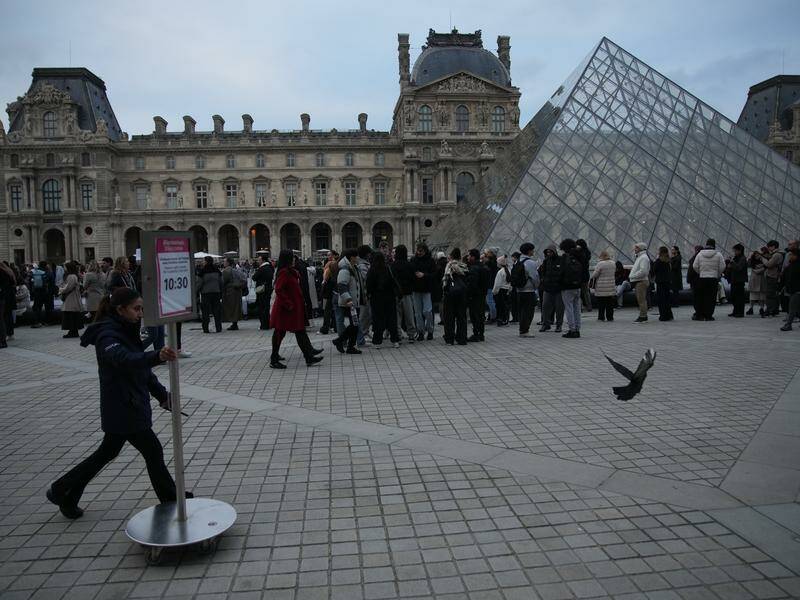
Employees at the Louvre Museum in Paris have voted to extend their strike, continuing a disruption that has affected operations at the world’s most visited museum. The strike reflects unrest over issues including chronic understaffing, deteriorating building conditions, and recent management decisions. These pressures have intensified following a brazen daylight heist of the museum’s crown jewels in October 2023.
During a general assembly on Monday, union workers unanimously decided to walk out, with the museum remaining closed on its regular weekly shutdown on Tuesday. It is currently uncertain whether the strike will lead to a complete closure on Wednesday. Visitors with pre-purchased tickets formed queues outside the museum as management assessed staffing levels and determined if there were enough employees available to safely open the galleries.
The situation has become increasingly tense, particularly after the crown jewels theft, which exposed significant security shortcomings at the Louvre. In response to the growing unrest, officials from the French Culture Ministry held crisis talks with union representatives on Monday. They proposed several measures, including canceling a planned cut in funding for 2026, initiating new recruitment for gallery guards and visitor services, and increasing staff compensation. Despite these proposals, union officials indicated that they fell short of addressing the underlying issues.
On Wednesday, Louvre President Laurence des Cars is scheduled to appear before the Senate’s culture committee. Lawmakers are investigating security failures at the museum, which des Cars has described as an “institutional failure.” Her leadership has faced scrutiny following her admission that she only became aware of a critical security audit from 2019 after the recent robbery.
Criticism has also come from France’s Court of Auditors and a separate administrative inquiry, which highlighted delays in implementing a long-promised security overhaul. Last month, the Culture Ministry announced emergency anti-intrusion measures, assigning Philippe Jost, known for overseeing the Notre Dame restoration, to help reorganize the museum. This appointment is widely interpreted as a response to the mounting pressure on Louvre leadership.
As the situation continues to evolve, both museum staff and visitors await clarity on the future of operations at one of the most iconic cultural institutions in the world.