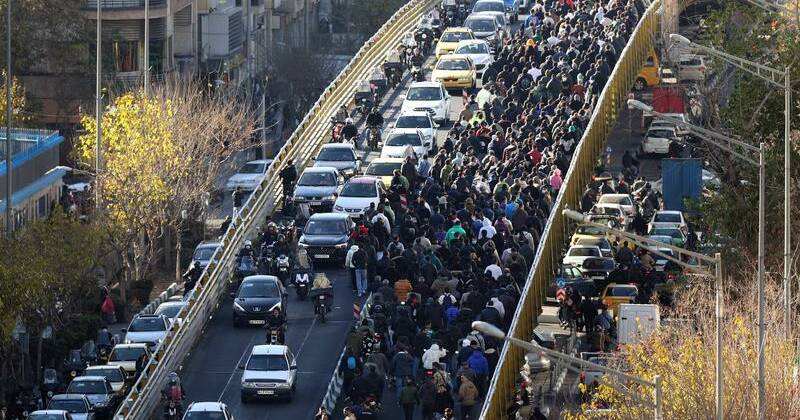
Protests have surged across Iran following calls for demonstrations from the exiled crown prince, Reza Pahlavi. Despite a nationwide communications blackout that includes internet and international phone service disruptions, thousands have taken to the streets in cities like Tehran, chanting against the government. Activists have shared videos showing protesters gathering around bonfires, with debris scattered across urban areas.
On Friday, Iranian state media reported on the protests for the first time, attributing violence to what they described as “terrorist agents” from the United States and Israel. The state media also mentioned “casualties” but did not provide specific details. In a brief address, Iran’s supreme leader, Ayatollah Ali Khamenei, indicated that authorities would respond forcefully to the demonstrators, stating that they were “ruining their own streets to make the president of another country happy,” referring to U.S. President Donald Trump.
The protests, which began on December 28, 2022, have escalated over Iran’s struggling economy and are now viewed as one of the most significant challenges to the government in years. According to the Human Rights Activists News Agency, violence associated with the protests has resulted in at least 42 deaths, with over 2,270 individuals detained.
Pahlavi’s call for protests has been seen as a rallying point, with significant numbers responding to his appeal for demonstrations at 8 PM local time on Thursday and Friday. Holly Dagres, a senior fellow at the Washington Institute for Near East Policy, noted that Pahlavi’s influence has played a critical role in mobilizing protesters. “What turned the tide of the protests was former Crown Prince Reza Pahlavi’s calls for Iranians to take to the streets,” she stated.
Witnesses reported that when the clock struck 8 PM, neighborhoods across Tehran erupted in chants of “Death to the dictator!” and “Death to the Islamic Republic!” Many demonstrators expressed support for the Pahlavi monarchy, shouting phrases like, “This is the last battle! Pahlavi will return!” The protests reflect deep-seated frustration over the government’s handling of the economy, particularly as Iran’s currency, the rial, has plummeted to approximately 1.4 million to $1.
As the protests continue, Pahlavi has urged European leaders to join Trump in holding the Iranian regime accountable. He criticized the government’s actions, stating, “Iranians demanded their freedom tonight. In response, the regime in Iran has cut all lines of communication.” His previous support for Israel has drawn mixed reactions, especially following the recent military conflict between the two nations.
The Iranian regime’s crackdown on dissent is not new; the country has experienced waves of protests in recent years, particularly as economic conditions have worsened. The state media acknowledgment of the protests marks a significant moment, highlighting the regime’s struggle to control the narrative amid growing unrest.
As demonstrators call for change, the full impact of the protests remains to be seen. The international community watches closely as this situation unfolds, with the potential for significant implications for Iran’s political landscape.