




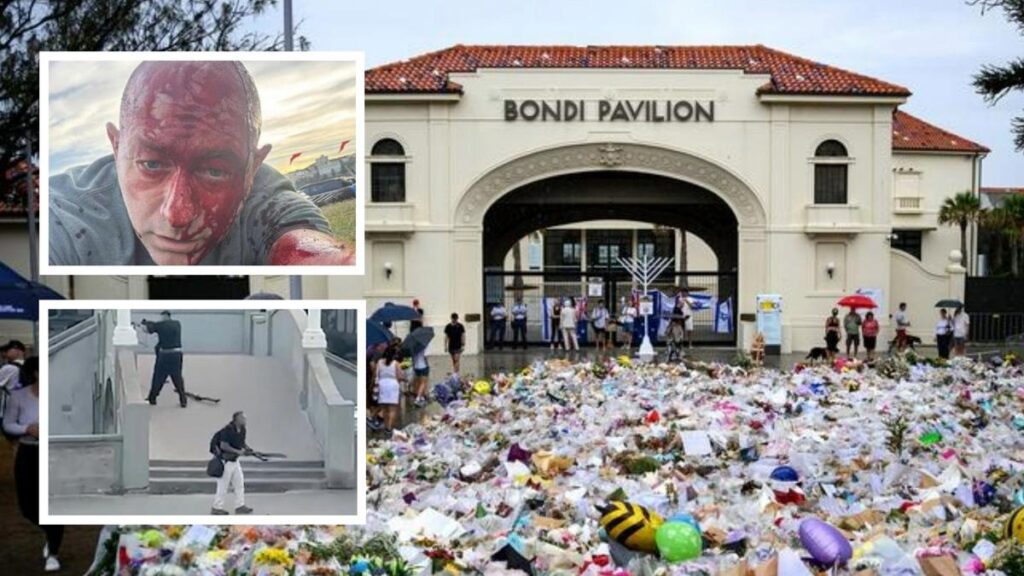
Australia’s internet watchdog has revealed it received nearly 100 complaints about harmful online content relating to the Bondi Beach massacre
URGENT UPDATE: Australia’s eSafety Commission has received nearly 100 complaints regarding harmful online content related to the Bondi Beach massacre that occurred on December 14. Among these, one complaint was classified as class one material, indicating its extreme nature.
The Commission swiftly mobilized a dedicated investigation team after graphic videos and images of the incident circulated online shortly after the attack. Disturbing footage showed the gunman targeting participants at a Chanukah celebration, leading to widespread outrage and concern.
In a statement, an eSafety spokesman confirmed they addressed 98 official complaints, engaging with major tech companies to ensure appropriate actions were taken regarding the disturbing content shared on their platforms. “This material is no longer available online and no further action from eSafety is required at this time,” the spokesman added, emphasizing that only one complaint met the threshold for illegal content.
The eSafety Commission is working to protect users, particularly children, from exposure to such graphic material. They have implemented measures like content warnings and the removal of explicit violence.
Online anti-Semitism research group CyberWell has also been closely monitoring social media reactions in the aftermath of the attack. Their analysis of 164 pieces of content revealed alarming trends, garnering over 8.1 million views and more than 255,000 interactions. Founder Tal-Or Cohen Montemayor expressed grave concerns about the narratives emerging online, which often justified or normalized violence against victims, including false claims that Jews orchestrated the attack.
“We are deeply concerned by the nature and volume of this content,” Montemayor stated. “This type of online anti-Semitism sends a dehumanizing message: that Jews are not worthy of empathy, protection, or sympathy.”
Misinformation has also plagued the discussion surrounding the attack, including a deepfake image generated of gunshot victim Arsen Ostrovsky. This false depiction misrepresented him as being on a film set, further complicating the narrative surrounding the tragedy.
Additionally, the identity of the hero who intervened, Ahmed Al Ahmed, was misreported, with a fabricated name circulating in disinformation campaigns. This has raised alarms about the responsibility of social media platforms in combating false narratives.
On Friday, Labor MP Josh Burns criticized the current state of social media as a “cesspool” for hate speech, urging the ongoing Royal Commission to investigate the role these platforms play in disseminating anti-Semitism. “The consequences for people spreading hate online have been extremely minimal,” he remarked during an interview with ABC Breakfast.
Prime Minister Anthony Albanese has tasked eSafety Commissioner Julie Inman Grant with addressing online safety concerns related to the Bondi attack. Following the incident, the Prime Minister announced a collaboration with Jillian Segal, the Special Envoy to Combat Antisemitism, to provide recommendations for improving online safety, particularly regarding anti-Semitic content.
The government’s response plan includes reviewing the Online Safety Act by the first quarter of 2026 to address the growing concerns over online hate. However, recommendations from Segal’s report to enhance transparency around social media algorithms that promote hate remain unimplemented, facing potential hurdles in accountability.
Inman Grant has previously criticized tech companies for their reluctance to disclose algorithmic transparency, which she described as their “secret sauce” for user engagement. The ongoing dialogue highlights the urgent need for accountability in online spaces, particularly following such a devastating attack.
As the situation continues to evolve, authorities and advocates urge immediate action to mitigate the spread of hate and misinformation online.
