




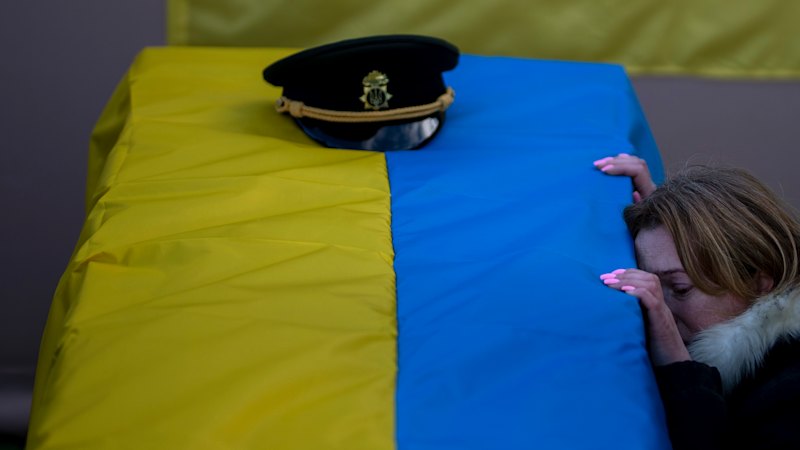
The ongoing war in Ukraine has resulted in a staggering toll, with nearly **2 million** soldiers from both Russia and Ukraine either killed, wounded, or missing since the conflict began nearly four years ago. A recent study by the **Centre for Strategic and International Studies** (CSIS) in Washington estimates that **1.2 million** Russian troops and approximately **600,000** Ukrainian personnel have been affected, bringing the combined casualty figure to nearly **1.8 million**.
This grim assessment highlights the slow progress of Russian forces in Ukraine. The study indicates that Russian troops have advanced only between **50 to 230 feet** per day in some areas. Since January 2024, Russia has managed to occupy an additional **1.5 percent** of Ukrainian territory, which now totals around **20 percent** of the country.
As winter temperatures have settled in, military operations on both sides have faced significant challenges. While Russia has made gradual gains in the **Luhansk** and **Donetsk** regions, its tactics have changed. The presence of drones has curtailed major armored movements, leading Russian forces to rely on small groups of soldiers using motorcycles or moving on foot to avoid detection. Ukrainian forces have adapted similarly, employing drones to track Russian movements through footprints and tire tracks in the snow.
The casualty figures have emerged following recent diplomatic talks involving Russian, Ukrainian, and US officials, which concluded on a cautiously optimistic note. **Ukrainian President Volodymyr Zelensky** expressed that progress had been made, and further discussions are anticipated. **Dmitry Peskov**, a spokesperson for the Kremlin, confirmed that negotiations would continue the following week.
According to the CSIS report, the death toll among Russian troops has surged to nearly **325,000** since **February 2022**, when President **Vladimir Putin** initiated the invasion. The study points out that no major power has experienced such high casualty figures since **World War II**. In **2025** alone, Russian deaths and injuries have been estimated at around **415,000**, averaging nearly **35,000** casualties per month.
In comparison, the study suggests that between **100,000** and **140,000** Ukrainian troops have lost their lives since the war commenced. Notably, Russia maintains a significant numerical advantage on the battlefield, with a ratio of nearly **3 to 1** over Ukrainian forces. This disparity has placed Ukraine at a disadvantage, as it endures a heavier toll relative to its smaller military.
Despite the high casualties, Russia has sustained its troop levels through various means, including the first draft since World War II and enlisting prisoners. The government has also offered bonuses to new recruits. Reports indicate that as many as **15,000** North Korean troops have joined Russian forces, primarily in the western **Kursk** region, although South Korean intelligence suggests that hundreds of these soldiers have also been killed in combat.
The war’s ongoing strain has had significant economic repercussions for Russia. According to **Seth G. Jones**, one of the study’s authors, Russia’s war economy is under increasing pressure, with manufacturing in decline and an anticipated growth rate of only **0.6 percent** in **2025**. The lack of globally competitive technology firms further hampers long-term productivity.
The data presented in the study reflect a troubling trend for Russia. Jones notes that the high casualty numbers, the sluggish pace of territorial gains, and economic decline indicate that Russia is experiencing a serious decline as a major power. He emphasizes, “While Russia still possesses nuclear weapons and a large military, it is no longer a great power in most military, economic, or science and technology categories.”
As the conflict continues, the humanitarian impact remains profound, with countless families affected by the loss of soldiers on both sides. The international community watches closely as diplomatic efforts to resolve the conflict evolve and the situation on the ground remains precarious.
