




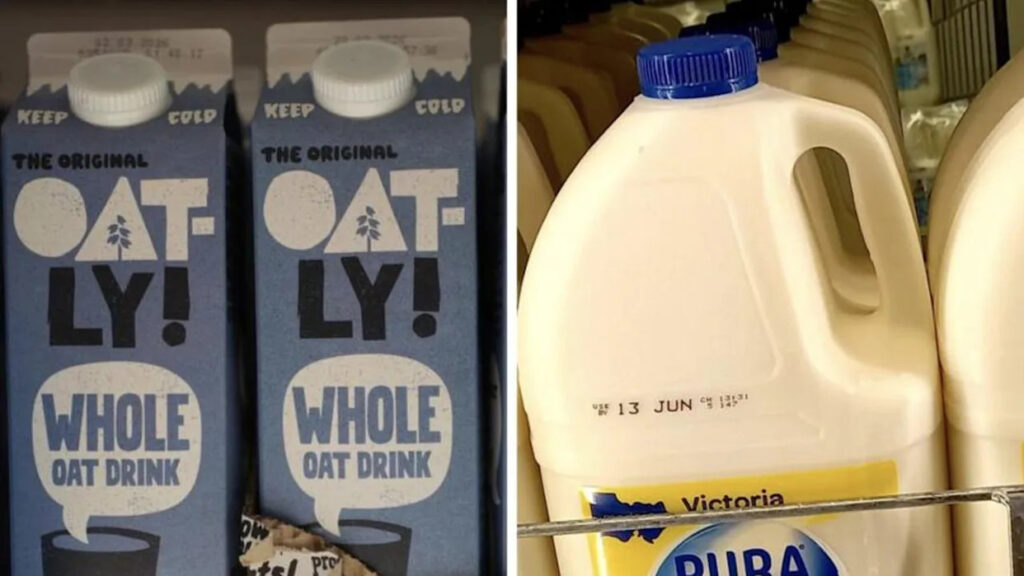
The Australian dairy industry is pushing for stricter labelling laws following a significant ruling by the UK Supreme Court that prohibits the Swedish company Oatly from using the term “milk” to describe its oat-based drinks. This decision, made last month, reinforces existing regulations in the UK, European Union, and the United States that reserve dairy terminology for animal-derived products. The Australian Dairy Farmers (ADF) argue that similar regulations are necessary in Australia to protect consumers and the integrity of dairy products.
According to the ADF, the current voluntary labelling guidelines in Australia allow for misleading use of dairy terms on plant-based products. ADF president Ben Bennet emphasized the importance of clear communication to consumers. “When consumers pick up a product labelled ‘milk’, it should come from a cow – not a marketing department,” he stated. Bennet added that consumers should have confidence in the nutritional value of dairy products and not be misled by alternatives that suggest they offer the same benefits.
In January, Julie Collins, the Minister for Agriculture, Fisheries and Forestry, announced plans to enhance existing voluntary labelling guidelines through an Industry Code of Practice led by the Alternative Proteins Council. This initiative followed a $1.5 million government-funded review by Food Standards Australia New Zealand (FSANZ). The review concluded that consumers can generally identify plant-based products but noted that confusion often arises from the use of animal imagery rather than dairy terminology.
Collins stated, “Australian consumers should be able to clearly identify both traditional and alternative protein sources.” The goal of the new Code of Practice is to improve labelling standards so that consumers can easily distinguish between dairy and plant-based options.
Despite these efforts, the ADF criticizes the findings of the FSANZ review, arguing it did not adequately assess consumers’ understanding of the nutritional differences between dairy and highly engineered plant-based imitations. Bennet expressed concern over the potential conflict of interest, stating, “You cannot ask an industry that profits from using dairy language to write the rules about how dairy language should be used.”
Nutritionist Courtney Steward weighed in on the debate, noting that the research indicated consumer confusion was primarily linked to animal imagery. “If the forthcoming industry code of practice adequately addresses presentation and imagery concerns – and the sector adheres to it – further enforcement action is less likely,” she said.
As the Australian dairy sector navigates these challenges, the call for mandatory regulations to reserve dairy terminology for actual dairy products continues to gain momentum. The ADF insists that the integrity of dairy terms is essential for maintaining consumer trust and clarity in the marketplace.