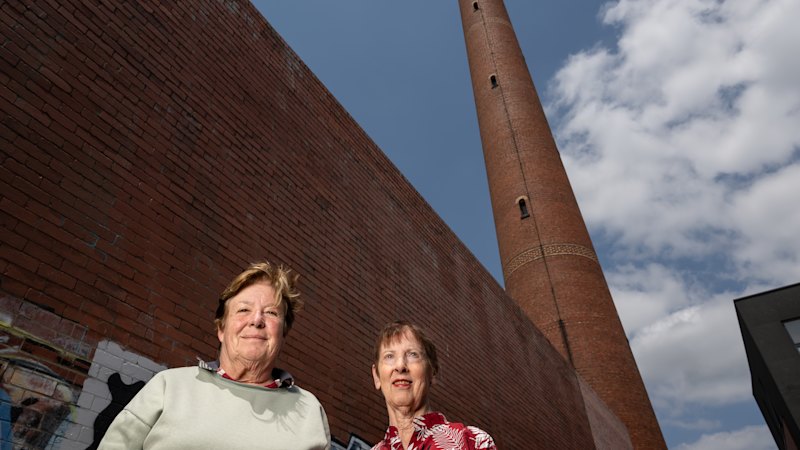
The iconic shot tower in Clifton Hill, a remnant of the city’s industrial past, is currently facing a significant challenge. A graffiti tag known as “Pam the Bird” has drawn attention to the heritage-listed structure, which stands at 67 metres tall and has remained largely unoccupied. Built in 1882, the tower was once pivotal in the production of lead pellets for shotguns, representing a unique aspect of Melbourne’s manufacturing history.
Dale Campisi, a local historian and author, emphasized the importance of the tower as a landmark. “The fact that it’s still here is amazing,” he stated. “It’s a landmark. Everybody that uses the Eastern Freeway knows that tower.” It serves not only as a visual marker but also as a reminder of the area’s rich industrial heritage.
Historical Significance and Current Condition
The Clifton Hill shot tower is one of only two remaining in Melbourne, with the other located in Melbourne Central. Both structures were previously owned by the same family, alongside a third tower in Tasmania, which are considered the last of their kind in Australia. The process of creating lead shot involved dropping molten lead through a sieve from the tower’s top, forming pellets that cooled in a vat of water below—a method that continued until innovations during World War II brought an end to such production practices.
Karen Cummings, president of the Collingwood Historical Society, pointed out the tower’s visibility from multiple directions, reinforcing its status as a significant local landmark. “It’s a reminder of the past, and how people made their living in the past,” she remarked.
Despite its historical significance, the Clifton Hill tower is privately owned and currently closed to the public. Campisi described it as “effectively abandoned,” highlighting the need for preservation efforts alongside potential development.
Graffiti Cleanup Efforts and Challenges
The tower gained notoriety in October 2024 when it was defaced with the “Pam the Bird” tag. This incident raised questions about responsibility for the cleanup. The alleged graffiti artist faces 200 charges and is scheduled to appear in court in February. While the Yarra City Council is allowed to remove graffiti from private buildings, their access is limited to surfaces less than three metres high.
In cases of significant neglect, Heritage Victoria can order owners of heritage-listed sites to undertake repairs. The department reached out to the tower’s owner, Phil Kapogiannis, in November 2024, seeking assurance that action would be taken regarding the graffiti. Kapogiannis stated last year that he was collaborating with conservationists to determine the best course of action. “Any form of graffiti is taken as neglect,” he noted, recognizing the challenges involved in restoring the tower’s integrity.
A spokesperson for Heritage Victoria confirmed that they are awaiting proof from Kapogiannis of ongoing efforts to remove the graffiti. Should no evidence be presented, the agency may consider enforcement actions.
Cummings expressed disappointment over the visible graffiti, stating, “What would be nice is if people who go around defacing things had a bit more appreciation for what’s there.” The community is hopeful for a resolution that will not only restore the tower’s appearance but also preserve its historical value for future generations.