



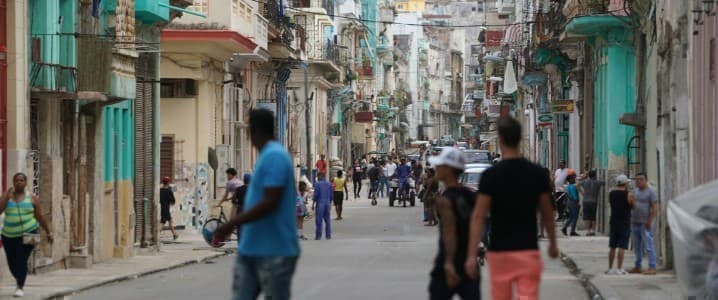
Cuba faces a significant energy crisis, with residents enduring frequent blackouts exacerbated by recent geopolitical events. The island nation is now assessing renewable energy solutions to diversify its energy sources and improve security. The situation deteriorated further in February 2024, as fuel rationing was introduced following U.S. actions aimed at cutting off energy supplies from Venezuela, which has historically provided Cuba with a substantial portion of its oil.
In January 2024, former U.S. President Donald Trump threatened to impose tariffs on nations supplying oil to Cuba, leading to Mexico’s initial decision to continue crude shipments as humanitarian aid. However, this aid was halted in February 2024 after President Claudia Sheinbaum of Mexico responded to Trump’s threats. “It’s currently on hold, and we are seeking to avoid any negative impact on Mexico and, as always, to find the best diplomatic solution for Cuba to receive the fuel,” Sheinbaum stated during a press conference on February 9.
As Cuba grapples with immediate fuel shortages, residents are turning to alternative energy sources, such as charcoal for cooking and solar panels for electricity generation. The government has prioritized fuel rationing for essential services and economic activities. To address the crisis, Cuba recognizes the urgent need for a long-term solution that reduces reliance on foreign oil and enhances energy security. The country’s vulnerability to extreme weather makes this dependence increasingly concerning.
In a notable move, the Cuban government has committed to the UN Framework Convention on Climate Change (UNFCCC), pledging to increase its renewable energy capacity to 26 percent of the total energy supply by 2035. Currently, renewable sources, primarily solar energy, account for only 9 percent of the state electricity utility’s supply. Although Cuba installed its first solar panels in the late 1980s and opened its first wind farm in 1999, progress in developing renewable energy has been limited due to insufficient political will and funding.
The government released its National Energy Transition Strategy in September 2024, outlining plans to boost domestic crude production and enhance renewable energy development. China has emerged as a critical partner, providing financial support and expertise in green energy initiatives. The largest wind farm on the island, La Herradura 1, is currently under construction, funded by Chinese investment. The initial phase involves the installation of 22 wind turbines aimed at generating 33 MW of clean energy.
In December 2024, China signed a deal with Cuba to develop seven solar parks with a combined capacity of 35 MW. The Cuban government has set an ambitious goal of developing 92 solar parks with a total capacity of 2 GW by 2028, with significant support from Chinese financing. As of October 2025, approximately 35 solar parks had been completed. However, to enhance the reliability of these solar parks, Cuba must also invest in battery storage and improve its aging transmission network, which currently suffers from a 16 percent loss of generated electricity.
Investment in battery storage may pose challenges. Ricardo Torres, an energy economist at the American University in Washington, estimates that Cuba’s energy transition will require between $8 billion and $10 billion over the next decade. “Cuba simply does not have that kind of money, and China will not pay for everything,” Torres explained.
Beyond financial challenges, Cuba must also cultivate the necessary technical expertise to manage renewable energy projects, as the country lacks skilled workers in this sector. Despite these hurdles, some wealthier households and business owners are increasingly investing in solar panels. While poorer Cubans resort to charcoal or wood, solar panels have become more visible in affluent neighborhoods, particularly in Havana.
The number of solar panel installation firms has surged since the Cuban government relaxed import restrictions on solar equipment, predominantly manufactured in China. Yet, with the cost of a basic solar package reaching around $2,000, access remains limited for many Cubans.
Cuba aims to significantly enhance its renewable energy capacity in the coming years to reduce dependence on foreign fossil fuel imports and bolster energy security. Achieving these ambitious goals will necessitate substantial funding and expertise, which the nation will struggle to secure without international support. The ongoing energy crisis underscores the urgency of Cuba’s transition towards sustainable energy solutions.