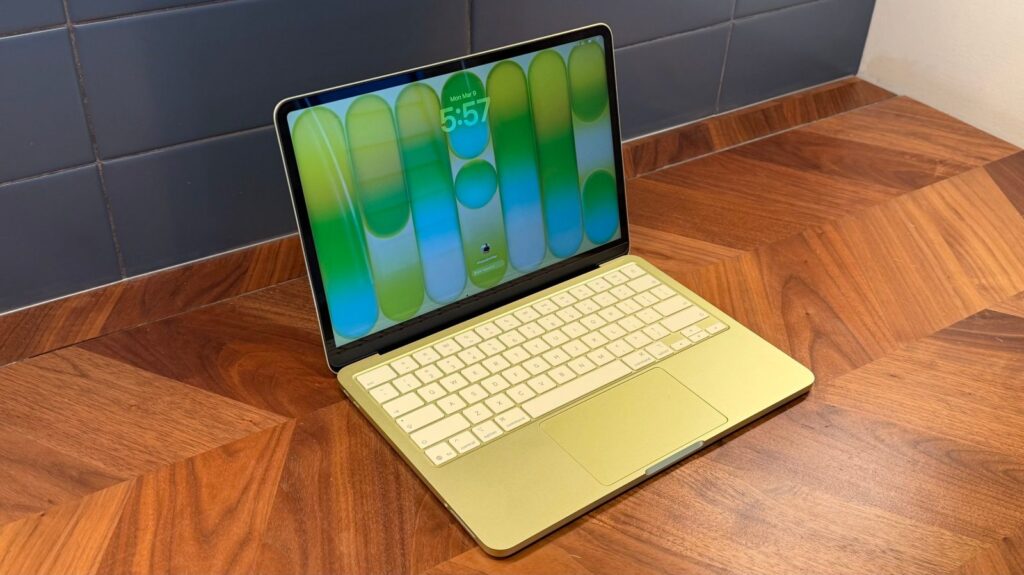
Apple has unveiled its latest offering, the MacBook Neo, priced at an impressive $599, which is set to attract a new wave of users to the Mac ecosystem. This launch, which took place in New York City on March 15, 2024, highlights Apple’s commitment to providing quality technology at accessible prices.
Impressive Design and Build Quality
From a hardware perspective, the MacBook Neo showcases the renowned build quality synonymous with Apple products. Crafted from aluminum rather than plastic, it boasts a sturdy and premium feel. Unlike previous models, the Apple logo lacks the shiny finish, and the display does not feature a notch.
During a comparative demonstration, Apple highlighted the MacBook Neo’s superior build quality against a similarly priced HP laptop. Observers noted that the HP model creaked with each keyboard press, while the MacBook Neo remained silent, emphasizing Apple’s dedication to craftsmanship. Available in four colors—silver, citrus, blush, and indigo—the design choices reflect a balance between classic and contemporary aesthetics. The color-matched keyboard further enhances the visual appeal of the device, particularly in the indigo model where the blue hue is vividly noticeable.
While expectations for a thinner and lighter device reminiscent of the 12-inch MacBook from 2015 were prevalent, the MacBook Neo weighs the same as the MacBook Air, albeit with a slightly thicker profile. Its smaller 13-inch screen gives it a compact footprint, making it convenient to transport.
Display and Performance Insights
The MacBook Neo features a 2408-by-1506 resolution display, offering 500 nits of brightness and compatibility with 1 billion colors. However, it does not support the P3 wide color gamut, which may concern professionals engaged in color-sensitive work. Nevertheless, for everyday use, the display delivers satisfactory performance without noticeable shortcomings.
Powering the device is the A18 Pro chip, which includes a 6-core CPU and a 5-core GPU. This chip, shared with the iPhone 16 Pro, signifies a significant crossover between Apple’s mobile and desktop technology. Despite having just two USB-C ports—one operating at USB 3 speeds and the other at USB 2—users can expect a seamless macOS experience. Apple has ensured that software compatibility remains robust, despite the hardware limitations.
In terms of performance benchmarks, the MacBook Neo meets expectations, particularly for single-core tasks, making it suitable for various applications including writing, editing, and research. The battery life is commendable, boasting up to 16 hours of video playback from a 36.5Wh battery, indicating efficiency relative to its size.
Trade-offs include the absence of a backlit keyboard and support for True Tone technology, which some users may find limiting. Additionally, while the trackpad operates differently than the Force Touch trackpads found on higher-end models, it still offers a satisfactory user experience.
The MacBook Neo supports only a single external display at 4K resolution, which may not meet the expectations of all users. Nevertheless, this model stands out as accessible and well-built, making it a viable option for many.
The MacBook Neo is designed with a target audience of new Mac users in mind, which is evident in Apple’s marketing approach. The clear configuration options distinguish it from the MacBook Air and MacBook Pro, allowing consumers to make informed decisions.
With its launch, Apple aims to provide a gateway for users transitioning from PCs to Macs. As John Ternus, Apple’s Senior Vice President of Hardware Engineering, noted during the launch, “Life is just better when you’re using a Mac.” This sentiment encapsulates the experience Apple hopes to extend to a broader audience.
Overall, the MacBook Neo is not merely a budget-friendly option; it represents a significant step in making high-quality computing accessible to more users. For those looking to enter the Mac ecosystem, this device offers an enticing combination of performance, design, and price.