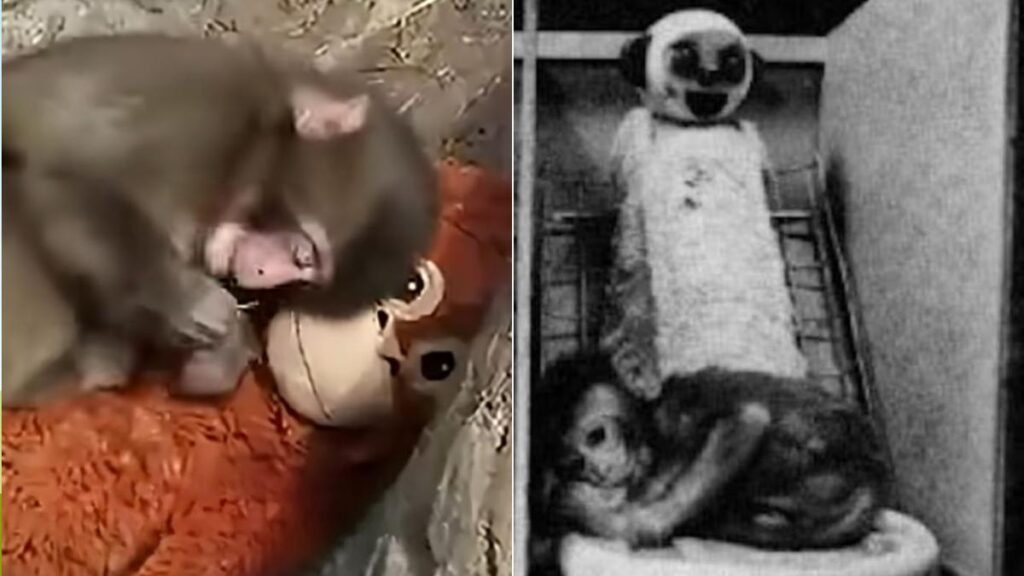
Punch, a baby macaque born in July 2025, has captivated audiences worldwide as he clings to a plush toy after being abandoned by his mother. Taken in by the Ichikawa City Zoo in Japan, Punch initially struggled to integrate with his troop, facing bullying from older monkeys due to his lower status. To help alleviate his anxiety, zookeepers provided him with a soft orangutan toy from IKEA, which he quickly adopted as his constant companion.
Videos showing Punch carrying his plush “mum” surrogate and seeking comfort after skirmishes with his group have gone viral, drawing large crowds to his enclosure at Ichikawa City Zoo. The popularity of Punch has led to a surge in demand for the plush toy, resulting in its sell-out status in stores globally. IKEA has even stepped in to send additional orangutan toys for Punch’s enjoyment.
Attachment Theory and Its Modern Implications
The bond between Punch and his plush toy reflects principles from a notable 1950s experiment conducted by American psychologist Harry Harlow. In his study, Harlow separated rhesus monkeys from their mothers and offered them two surrogate “mothers”: one made of wire that provided food, and another wrapped in soft terry cloth that offered comfort but no nourishment.
Professor Mark Nielsen from the University of Queensland explained, “This doll was soft and comfortable, but it didn’t provide food or drink; it was little more than a furry figure the baby monkey could cling to.” The experimental setup revealed that baby monkeys preferred the soft, non-nourishing surrogate over the wire mother, challenging the prevailing belief that attachments were formed solely based on the fulfillment of physical needs.
Nielsen noted that today’s ethical standards would deem Harlow’s experiments as cruel and inhumane. “You wouldn’t take a human baby away from its mother to conduct such an experiment, so we shouldn’t do this to primates either,” he stated. Although the zoo is not running an experiment, Punch’s situation unintentionally mirrors Harlow’s study, highlighting the significance of emotional bonds.
The Importance of Emotional Nourishment
Punch’s story resonates beyond his viral fame; it serves as a poignant reminder of the necessity of emotional nourishment. Nielsen emphasized, “We all need soft spaces. We all need safe spaces. Love and warmth are far more important for our well-being and functioning than physical nourishment alone.” His attachment to the plush toy has provided him the comfort and security he lost when his mother rejected him.
Harlow’s findings have significantly influenced modern attachment theory, which posits that healthy childhood development relies on forming secure emotional bonds with caring caregivers. Without warmth and emotional support, even a well-fed child may struggle to establish a secure attachment.
Since developing his bond with the plush toy, Punch has begun socializing with other macaques in his enclosure, gradually improving his status within the group while keeping his beloved companion close. The emotional journey of Punch serves as a testament to the importance of nurturing connections, whether human or animal. His story continues to inspire many, reminding us of the enduring need for love and comfort in a world that can often feel isolating.