



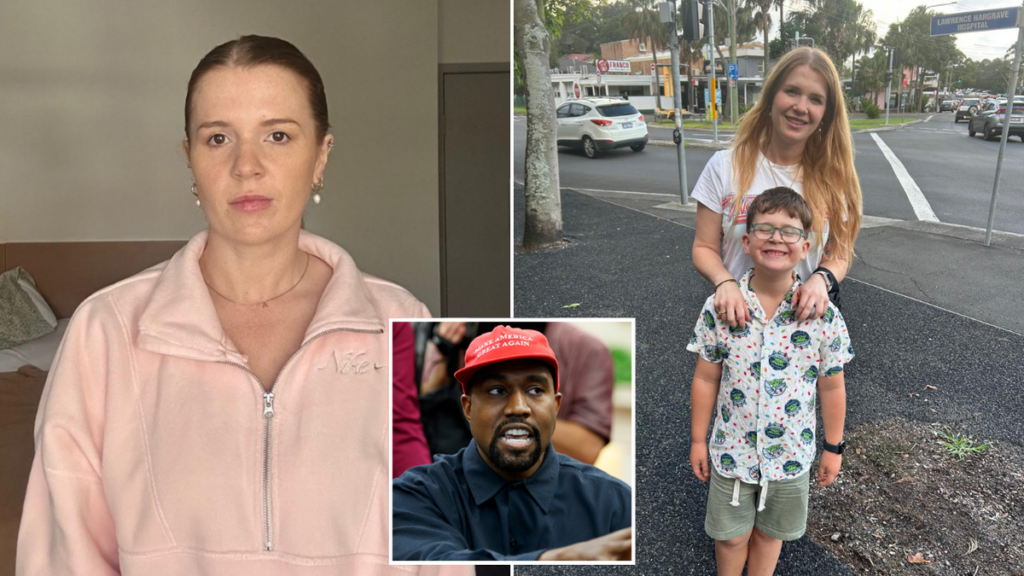
Kanye West, now known as Ye, has sparked renewed discussions about mental health after publicly apologising for his erratic behaviour and inflammatory remarks, attributing much of his actions to untreated bipolar disorder. The rapper took out a full-page advertisement in The Wall Street Journal, acknowledging the pain caused by his controversial comments and seeking to clarify his struggles with the condition.
This statement resonates deeply with individuals like Hannah Gartrell, a 36-year-old mother from Wollongong, NSW, who has faced her own battle with bipolar disorder. Gartrell began experiencing mental health challenges as a teenager, leading to self-harm and a prescription for antidepressants by age 20. It was not until her third diagnosis that she began to truly accept her condition and learn to manage it effectively.
Gartrell’s journey is a testament to the complexities surrounding bipolar disorder. She recalls grappling with the stigma associated with her diagnosis, which contributed to her initial reluctance to adhere to prescribed medication. “I didn’t believe it because I had a lot of preconceptions about bipolar, so I got a second opinion which confirmed the diagnosis,” she explained. “But nonetheless, I still just felt a lot of stigma about it.”
Bipolar disorder, formerly known as manic-depressive illness, is characterized by extreme mood swings that include episodes of depression and mania. Diagnosing this condition can be particularly challenging, especially in young people, where initial symptoms may manifest as depression. Gartrell elaborated on a significant concern: “One of the signs of bipolar is that when you’re put on antidepressants, it can actually make things worse for you.”
Research from Australia indicates that individuals typically experience symptoms around the age of 17, but it can take more than a decade—approximately 12.5 years—before receiving a proper diagnosis. Gartrell noted that her acceptance of the disorder took even longer, highlighting the struggle many face in recognizing and accepting their mental health challenges.
During manic episodes, Gartrell described feeling an overwhelming sense of confidence, often believing she was invincible. “You think you can do anything and are untouchable,” she stated. She emphasized that such elevated moods can amplify decision-making processes, particularly when amplified by resources and public platforms, as seen in the case of Ye. “If you had the resources Kanye has, it would be very easy to increase the damage that you could do,” she added.
As the conversation around West’s apology unfolds, Gartrell hopes that his acknowledgment of mental health issues is sincere. “I know some of the things he’s said have caused a lot of pain for different communities,” she remarked, emphasizing the importance of accountability in public figures.
The stigma associated with bipolar disorder often leads to a denial of the condition, making acceptance difficult. Gartrell has personally encountered challenges in her dating life stemming from misconceptions about the disorder. “People seem to think that bipolar is just moodiness and mood swings,” she explained, countering the notion that bipolar individuals constantly oscillate between extreme emotions.
Reflecting on her past, Gartrell now recognizes how her mental health impacted her professional life. She expressed a desire to apologise to former employers for her inconsistent behaviour, which she attributes to being unmedicated during those years. “I think it’s only been with the clarity of my 30s and going on medication that I’ve been able to look back and actually identify what was me and what wasn’t me,” she stated.
Addressing her mental health challenges with her eight-year-old son has also required careful consideration. Gartrell reassures him that there is nothing for him to worry about, explaining that adults are taking care of her health. This openness aims to foster understanding and reduce fear surrounding her condition.
Gartrell actively shares her experience in hopes of destigmatising bipolar disorder and encouraging others not to dismiss a diagnosis due to fear. “I had two psychiatrists telling me I had bipolar, and I decided I knew better because of what I had seen about bipolar,” she confessed. Her mission is clear: to raise awareness and promote understanding of mental health issues.
For those struggling with their mental health, support is available. If you need help in a crisis, contact Lifeline at 13 11 14. For more information about depression, reach out to beyondblue at 1300 22 4636 or consult a trusted health professional.