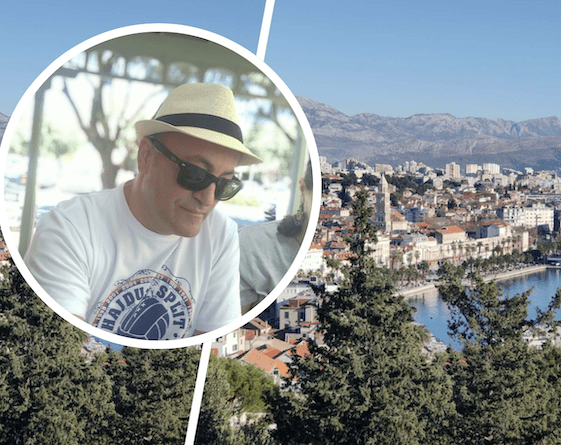
Boris Cerina, a native of Split who has established his life in Melbourne, recently returned to his hometown during the winter months for the first time in years. His visit offered a unique perspective on Split’s quieter season, highlighting the city’s charm beyond its summer crowds. Cerina shared his impressions of the winter atmosphere, the Advent season, and the local lifestyle known as “fjaka.”
Experiencing Split in Winter
Cerina’s decision to visit Split during the winter was deeply personal. He aimed to gather his family together in Croatia, taking advantage of the holiday break while his son studies and his daughter works in education. This timing, between early December and late January, coincided with the Croatian winter, allowing them to experience the city in a serene state.
Describing Split in winter, Cerina noted that it takes on a dreamy quality. The city centre appears almost deserted, with numerous shops closed and many restaurants and souvenir shops pausing their operations. He observed that life tends to slow down significantly during this season, particularly when the weather is less hospitable. The bustling summer crowds give way to tranquillity, especially on the streets surrounding the historic Diocletian’s Palace and the Riva waterfront.
Cerina remarked, “The heavy crowds, the lack of parking, and the sound of suitcase wheels rolling over stone paving in summer stand in stark contrast to the peace and quiet of winter.” He expressed relief at escaping the summer rush, although he acknowledged the shorter days can make time feel limited.
A Winter Wonderland: Culture and Community
Walking through Diocletian’s Palace without the usual throngs of tourists was a profound experience for Cerina, who has deep roots in the city. He reminisced about growing up just a short distance from the Palace and working nearby, describing the historical significance of the site as breathtaking. The illuminated streets and quiet alleys, free from the usual summer bustle, offered a new appreciation for the architecture and culture of Split.
The Riva remains a central social hub, even in winter. Cerina emphasized the importance of “fjaka,” a local lifestyle that embodies relaxation and enjoyment of the moment, usually involving coffee and leisurely observation of the world. He aptly described it as “driving a car when you take it out of gear and let it coast downhill until it comes to a stop on its own.”
During his stay, Cerina enjoyed pleasant weather, with temperatures ranging from 14 to 18 degrees Celsius, making walks on Marjan, a nearby hill, an absolute must. He also explored the newly developed Žnjanski Plateau, which is becoming a popular promenade for residents and visitors alike.
Cerina visited several cultural institutions, including the Archaeological Museum and the Meštrović Gallery, and he encouraged others to explore these sites. He noted, “Advent in Split has become far richer and more vibrant than it used to be,” highlighting the numerous concerts and cultural events leading up to New Year’s celebrations.
The Advent season was particularly memorable for Cerina, who noted it featured an array of performances and culminated in a spectacular fireworks display on the Riva. This year, the events were touted as the most exciting Advent programme in the past two decades, showcasing local talent and drawing visitors from across the region.
The culinary offerings of winter in Dalmatia also caught Cerina’s attention. He praised traditional dishes such as salt cod and fritule, a type of fried doughnut. He appreciated the opportunity to indulge in local specialties while experiencing the quieter side of the city.
Cerina’s exploration extended beyond Split. He visited nearby attractions including Salona, Trogir, and Dubrovnik, finding it easier to navigate these sites without the summer crowds. The absence of tourists allowed him to appreciate the historical significance and beauty of these locations in a more personal way.
Reflecting on his experiences, Cerina compared winter in Split to Melbourne, noting the distinct differences in atmosphere. He remarked that while Melbourne is a vibrant multicultural hub, Split offers a unique sense of history and culture that permeates daily life. He concluded, “And most importantly — Split has fjaka, and Melbourne simply does not.”
For those from the diaspora contemplating a winter visit to Split, Cerina’s advice is clear: take advantage of the cheaper flights, fewer crowds, and lovely weather. He emphasized the value of experiencing the city beyond its summer allure, calling attention to the rich traditions and vibrant community life.
As his visit concluded, Cerina expressed a desire to return, although he anticipates that his next trip will be in the summer. He fondly described winter in Split as “Winter on the Mediterranean with sunglasses and fjaka” — a blend of relaxation and seasonal charm.