




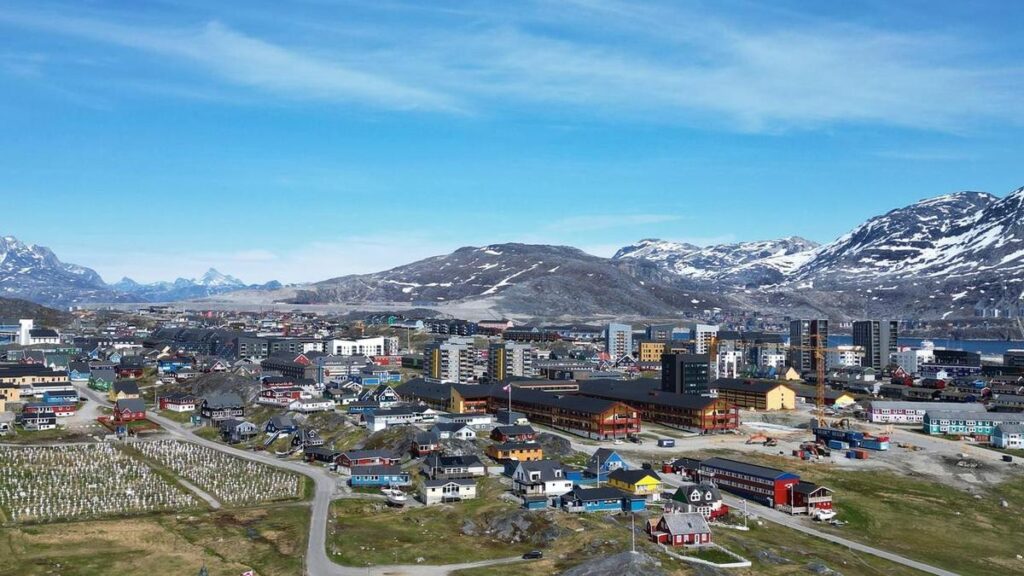
Greenland’s government has firmly stated its intention to strengthen the defense of the Arctic territory through the NATO military alliance, explicitly rejecting any United States ambitions to assert ownership over the island. This response comes in light of comments made by former US President Donald Trump, who suggested that ownership of Greenland would be necessary to prevent potential occupation by Russia or China.
In a statement, Greenland’s coalition government emphasized that all NATO member states, including the United States, share a collective interest in the island’s defense. “As part of the Danish commonwealth, Greenland is a member of NATO, and the defense of Greenland must therefore be through NATO,” the government declared, reiterating its position against any US takeover.
The issue of Greenland’s status gained renewed attention after Trump first proposed the idea of acquiring the territory in 2019. The US has long viewed Greenland as strategically important, particularly due to its rich mineral resources and geographic location. However, this notion has been met with considerable opposition within the United States, even from members of Trump’s own party.
Greenland’s Path to Independence
Denmark has governed Greenland for centuries, but the territory has steadily pursued greater autonomy since 1979. This move towards independence is a common goal shared by all political parties represented in Greenland’s parliament. Currently, while Greenland enjoys a high degree of self-governance, Denmark remains responsible for the territory’s security and defense policies.
During a recent statement on LinkedIn, Greenland’s Prime Minister Jens-Frederik Nielsen reinforced the island’s commitment to sovereignty, saying, “We are a democratic society that makes our own decisions. Our actions are based on international law.” This assertion underscores the desire for Greenland to define its own future without external pressures.
Meanwhile, European Union Commissioner for Defence and Space, Andrius Kubilius, warned that any military takeover by the US would jeopardize the integrity of NATO. His comments reflect a broader concern about the implications of US actions in the Arctic region and the potential for increased geopolitical tensions.
Greenland’s strategic significance continues to grow amid global competition for resources. As nations like the US, Russia, and China vie for influence in the Arctic, Greenland remains resolute in its commitment to NATO as the framework for its defense, rejecting the notion of unilateral control by any single nation.
As the international community watches closely, Greenland’s stance may set the tone for future discussions regarding the Arctic’s geopolitical landscape.