



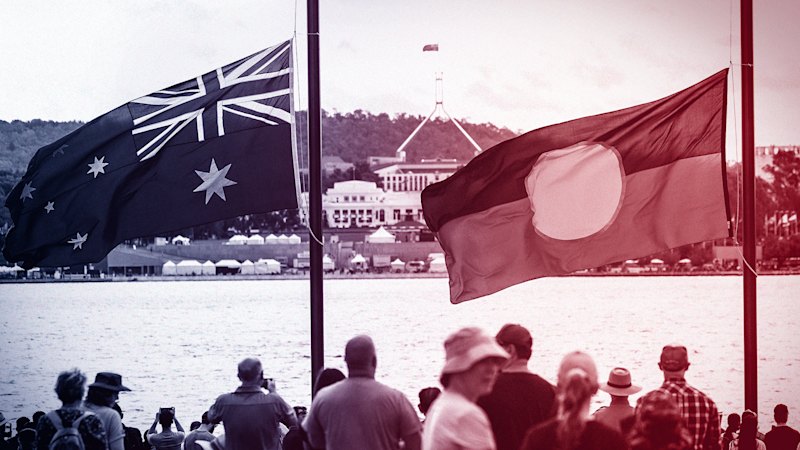
A recent poll reveals that a significant majority of Australians support maintaining Australia Day on January 26. Conducted by Resolve Political Monitor, the survey indicates that approximately 68 percent of respondents reject calls to change the date, despite ongoing objections from Indigenous Australians regarding the historical implications of the day.
The poll, which surveyed 1,800 voters between January 12 and 16, reflects a notable increase in support for January 26 as the national day. In January 2023, only 47 percent backed the date, rising to 56 percent in January 2024, shortly after the unsuccessful Voice to Parliament referendum. The latest findings show a consistent trend, with younger Australians aged 18 to 34 also leaning towards keeping the current date, as 55 percent of this demographic support January 26.
Public Sentiment and Invasion Day Protests
The growing support for Australia Day contrasts sharply with previous years, where calls for a date change were more pronounced. Support for changing the date has fallen dramatically from 39 percent in January 2023 to just 16 percent of respondents in the latest poll. The number of attendees at Invasion Day marches has also diminished. In 2019, 50,000 participated in Melbourne, while last year, attendance dropped to approximately 25,000 in both Melbourne and Sydney.
State authorities have approved plans for this year’s Invasion Day rallies in major cities, with the New South Wales Police Commissioner, Mal Lanyon, allowing protests in Hyde Park, previously designated as a no-protest zone. In Victoria, restrictions on protest powers have been lifted, enabling organizers to challenge stop-and-search powers imposed by the police.
While anti-immigration protests organized by March for Australia are also set to occur on Australia Day, previous events faced criticism due to participation by disbanded neo-Nazi groups.
Government Perspectives and Future Considerations
Resolve’s director, Jim Reed, emphasized the importance of a national day for fostering social cohesion. According to him, the steady rise in support reflects Australians’ desire for unity amidst the fragmentation seen in recent years. He remarked, “Australians need mechanisms that enable them to come together and express unity given all the division, uncertainty, fragmentation and pressures of the last few years.”
Prime Minister Anthony Albanese, in a recent interview with ABC Perth, described Australia Day as an opportunity to celebrate the country’s diverse history. He stated, “We have the oldest continuous culture on earth in Indigenous Australians… Our task is to be a microcosm for the entire world to show that harmony and diversity, that is our strength.”
While major political parties, including the federal Labor Party and the former Coalition, support January 26 as the national day, the Greens advocate for a change. Indigenous rights campaigner Thomas Mayo acknowledged the poll trends but expressed hope that Australians would eventually agree on a date less painful for First Nations communities.
In a statement, the Reconciliation Council highlighted that objections to celebrating January 26 are rooted in understanding historical facts and reflecting on responsibilities as Australians. They reiterated the importance of respectful discussions around the date.
As Australians prepare for January 26, the debate surrounding the significance of the day continues to evolve, reflecting a complex interplay of history, identity, and national unity.