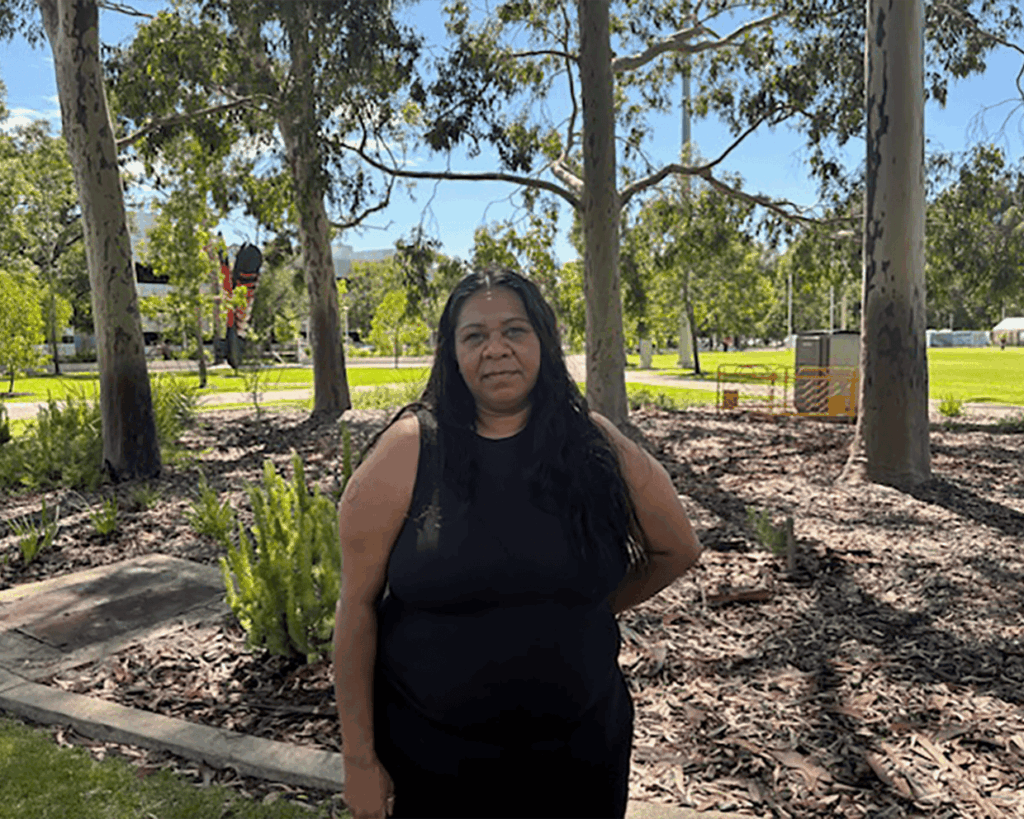
Loma Bropho, a single mother of six, has faced a harrowing journey over the past two years in her search for secure housing in Perth. Her family has experienced homelessness, often sleeping in their car or relying on relatives for temporary shelter. “It’s a horrible feeling,” Bropho shared, expressing the anxiety that comes with her uncertain living situation.
Currently, Bropho and her children are staying in short-term accommodation provided by crisis care, but the lack of a permanent home weighs heavily on her. “I keep telling them, you do understand, we don’t have a home,” she said. Bropho, who identifies as both a Noongar and Yamatji woman, worries about the emotional toll this instability may have on her children.
The broader issue of Indigenous housing in Australia is underscored by a recent report from the Australian Housing and Urban Research Institute. The three-year study reveals that families like Bropho’s are falling through the cracks of a “fragmented, complex and uncoordinated” housing system. Despite government commitments to improve housing outcomes for Indigenous people through the Closing the Gap agreement signed in 2020, progress remains limited.
According to the report, only 13% of Indigenous individuals living in public housing are connected to an Indigenous Community-Controlled Housing Organisation (ICCHO). Target 9A of the Closing the Gap initiative aims to increase the proportion of Indigenous people living in appropriately sized housing to 88% by 2031. Yet, Indigenous communities face the highest rates of unmet housing needs, with approximately 45,700 low-income Indigenous households—one in eight—experiencing this issue. This rate is double that of non-Indigenous Australians.
The study highlights that the number of low-income Indigenous households with unmet needs could increase by an additional 26,400 households over the next two decades due to factors like rising rents and overcrowding. A spokesperson for the federal government stated that efforts are being made to partner with Indigenous communities, noting that “better outcomes are achieved when communities have a real say in the design and delivery of the services that affect them.”
Despite these assurances, lead researcher Associate Professor Megan Moskos from Adelaide University argues that the current policy response is uncoordinated. “There’s no evidence of shared decision-making,” she stated. Moskos emphasized the need for substantial actions to support the growth of the ICCHO sector, including adequate funding.
Tina Ugle, managing director of the Perth-based ICCHO Noongar Mia Mia, echoed these sentiments. She asserted that community-controlled organizations are best positioned to address the housing crisis for Indigenous people. However, she noted a significant lack of available homes and highlighted the challenges posed by discrimination in the private rental market. “There is no stock transfer and investment from the government,” Ugle observed.
The federal government has announced investments aimed at addressing overcrowding and improving housing outcomes for First Nations Australians. This includes a commitment of $600 million under the Housing Australia Future Fund and $2 billion allocated for housing in the Northern Territory.
As Bropho continues her search for stable housing, the challenges faced by her family reflect the larger systemic issues impacting Indigenous communities across Australia. The urgency of addressing these issues remains evident as countless families navigate similar struggles and uncertainties in their quest for a safe and secure home.