




A series of significant scientific advancements have emerged this week, highlighting breakthroughs in medical research, historical interpretations, and cosmic phenomena. Researchers have achieved a remarkable feat in the fight against Alzheimer’s disease, while historians have made strides in understanding the purpose of the ancient Bayeux Tapestry. Additionally, astronomers have discovered three galaxies in the midst of a rare collision.
P7C3-A20, an experimental drug, has demonstrated the ability to completely reverse mental decline in mouse models with advanced stages of Alzheimer’s disease. In preclinical tests, the drug halted brain cell damage and reduced inflammation, while also restoring the integrity of the blood-brain barrier, which protects the brain’s vital functions. This development offers a glimmer of hope for future treatments aimed at addressing this debilitating disease.
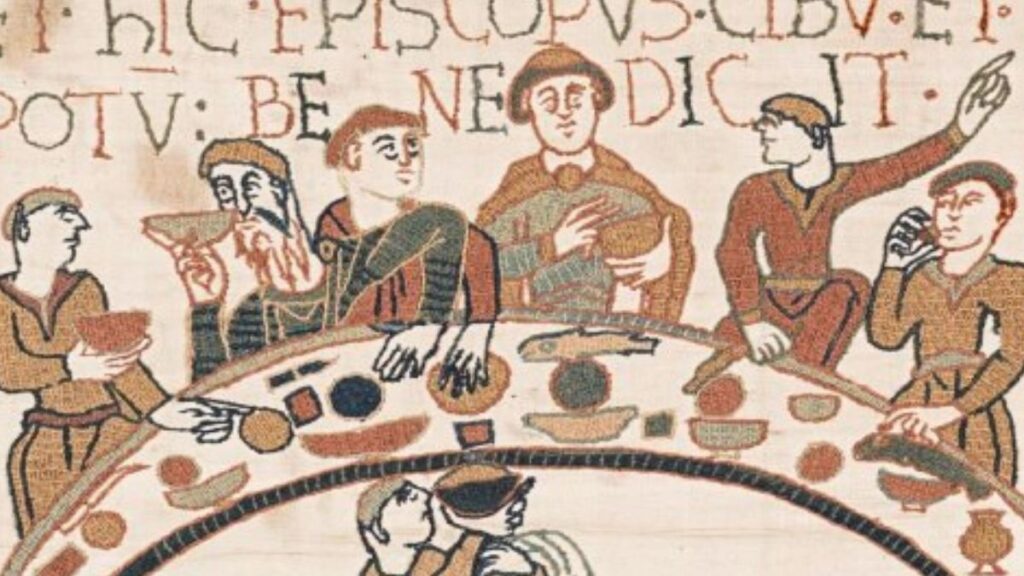
Bayeux Tapestry’s Purpose Uncovered
In a fascinating turn of events, historian Benjamin Pohl has proposed a new theory regarding the Bayeux Tapestry, a historically significant artifact that depicts the events leading to the Norman Conquest of England in 1066. Pohl suggests that the tapestry served as reading material during mealtimes at St Augustine’s Abbey in England. He emphasizes the importance of mealtime gatherings in the Middle Ages, stating, “Just as today, in the Middle Ages mealtimes were always an important occasion for social gathering, collective reflection, hospitality, and entertainment, and the celebration of communal identities.” This insight could redefine how historians view this remarkable piece of art and its function in medieval society.
Cosmic Collision: A Rare Discovery
In an exciting discovery, astronomers have identified three galaxies, each with active supermassive black holes at their centers, currently in the process of colliding. Astrophysicist Emma Schwartzman from the US Naval Research Laboratory remarked, “Triple active galaxies like this are incredibly rare, and catching one in the middle of a merger gives us a front-row seat to how massive galaxies and their black holes grow together.” This observation not only enhances our understanding of galaxy formation but also sheds light on the behavior of black holes during such cosmic events.
In another intriguing study, researchers have traced a gene variation that affects lactose tolerance among populations in South Asia. This genome-wide study suggests that the gene was likely introduced from the Eurasian Steppe and further amplified by positive selection pressures. The findings may explain why certain groups, particularly buffalo herders, have a diet rich in dairy products like milk and yogurt.
A recent theoretical paper has proposed a novel idea regarding particle mass, suggesting that it may be influenced by the twisted geometry of seven-dimensional spacetime. The researchers are on the lookout for a hypothetical particle known as the Torstone, which might be detectable through anomalies in particle collider experiments, unusual patterns in the cosmic microwave background, and even gravitational wave glitches.
Lastly, a groundbreaking study involving lab-grown “mini-brains” has unveiled unique neural signatures associated with schizophrenia and bipolar disorder. Biomedical engineer Annie Kathuria from Johns Hopkins University expressed hope that these brain organoids could be used not only to confirm diagnoses but also to test potential drug therapies aimed at restoring patients to a healthier state.
These diverse breakthroughs reflect the ongoing commitment of scientists and researchers across various fields to unravel the mysteries of the brain, the cosmos, and our historical past. Each discovery contributes to a deeper understanding of our world and offers new avenues for exploration and treatment.