



Scientists have returned to Heard Island to resume their research following a weather-related hiatus. On January 17, 2026, helicopter flights successfully transported 20 researchers to the island, taking advantage of brief weather windows. The team has re-established the Atlas Cove camp, facilitating further scientific operations in the region.
The scientists will focus on various environmental studies, including research on local plants and invertebrates. They are also documenting and collecting marine debris found near the old station. Biologists have been deployed to Fairchild Beach to conduct population surveys of seal species, while other team members are at Skua Beach to gather data on seabird populations.
In addition, researchers from the Securing Antarctica’s Environmental Future (SAEF) initiative are actively working in Paddick Valley. Their efforts include mapping the spread of the non-native grass species, Poa annua, using both ground and aerial surveys. A significant advancement is the installation of an ARTEMIS system at Atlas Cove, which is an autonomous weather station equipped with a high-resolution camera. This system will provide real-time data and imagery back to Australia, enhancing ongoing research efforts.
During this mission, the team has successfully returned four cage pallets of cargo to the research vessel RSV Nuyina, including a full cage of asbestos that was cleaned up from the old station. This cleanup represents a significant achievement in the management of the island’s environmental integrity.
The scientific teams are expected to remain on the island until Sunday, while the RSV Nuyina will head southwest of Heard Island to conduct further marine science. This includes a planned midwater trawl, which aims to sample marine life from six different depths within the water column.
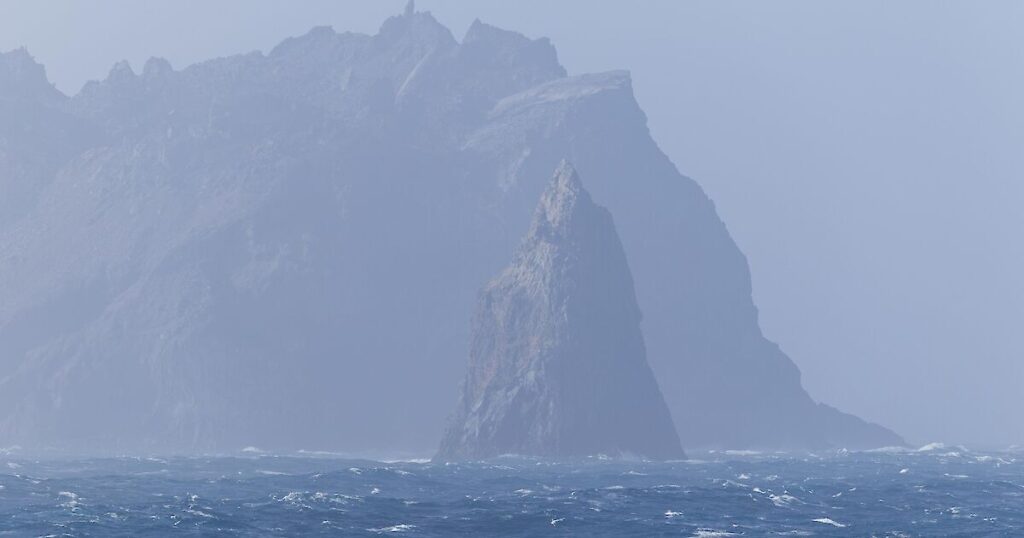
Despite challenging weather conditions, the RSV Nuyina has continued its activities. A day spent near the McDonald Islands involved using drones to investigate wildlife populations. The scientists documented a large colony of macaroni penguins, as well as sightings of king penguins, fur seals, and elephant seals. Remarkably, while observing the island via drone, several bird species, including penguins and petrels, approached the ship to investigate, gathering in significant numbers around the area.
As the research progresses, anticipation builds for the next phase of marine science and the insights that will emerge from the terrestrial scientists upon their return to the ship. The collaborative efforts of these researchers play a crucial role in understanding and preserving the unique ecosystems of Heard Island and its surrounding waters.