




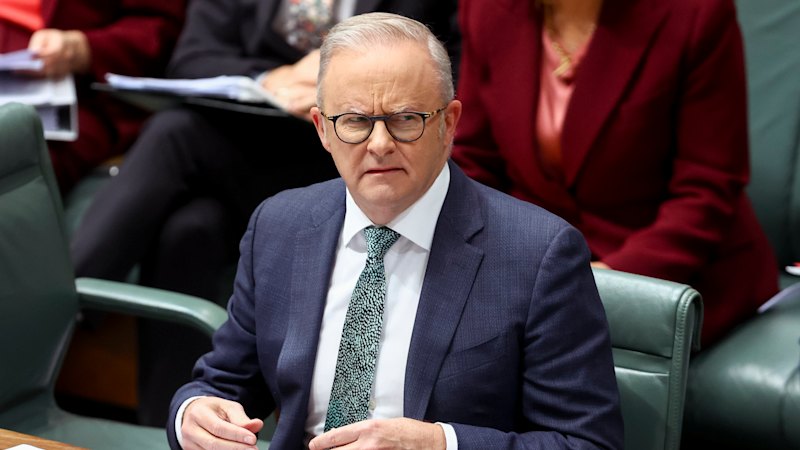
BREAKING: Australian Prime Minister Anthony Albanese has publicly expressed his strong opposition to the repatriation of Australian women and their children currently stranded in the Roj camp in Syria, stating he holds “nothing but contempt” for them. This declaration comes as the government faces mounting pressure from the opposition, which questions the issuance of Australian passports to these individuals.
In a revealing interview with ABC radio, Albanese confirmed that the government will not provide any support for the repatriation of these individuals, stating, “We will do nothing to assist these people coming back to Australia.” His comments were made amid reports that a group of 34 women and children are attempting to return to Australia, raising significant national security concerns.
Opposition Leader Angus Taylor reacted swiftly, insisting that the government should “shut the door” on these women, whom he claims threaten Australia’s core values. “I don’t believe people who want to bring hate and violence from another part of the world to Australia should be coming into the country,” Taylor stated. He further challenged the government’s rationale for allowing these individuals to return.
Adding to the controversy, Home Affairs Minister Tony Burke confirmed that the passports were issued legitimately, stating, “If anyone applies for a passport, as a citizen, they are issued with a passport.” However, opposition spokesman Jonno Duniam criticized this stance, questioning the government’s commitment to national security. “An application for a passport can be refused on national security grounds,” he noted, emphasizing that these women chose to support a terrorist organization.
Amidst these developments, Greens senator Mehreen Faruqi condemned the government’s lack of action to facilitate the return of the women and children. “These are Australian citizens. They need to be brought back and the concerns should be dealt with in Australia,” she argued, highlighting the dire conditions in the Roj camp, described as “one of the most difficult places in the world to be a child.”
The humanitarian angle was reinforced by Save the Children Australia chief executive Mat Tinkler, who stated that the women had previously agreed to collaborate with security agencies upon their return. “The best way to mitigate any risk that they pose is to put faith in our security and enforcement agencies,” he explained, calling for a balanced approach to the issue.
As this situation unfolds, the Australian government faces increasing scrutiny over its handling of the repatriation process and the implications for national security. The debate continues to intensify, with calls for legislative changes to prevent these women from returning to Australia.
WHAT’S NEXT: The government’s next move remains unclear, but with the opposition demanding stricter measures, all eyes will be on how authorities handle the complex balance between national security and humanitarian obligations. The Australian public is eager for answers, and further developments are expected in the coming days.
