




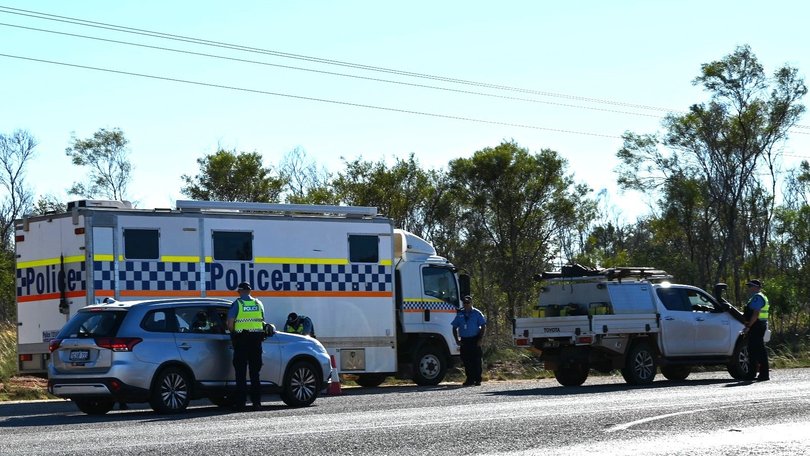
Kimberley police conduct checks on Broome Highway - police stop cars as part of .64 alcohol restrictions that are in place in Broome and Derby
UPDATE: Kimberley police have intensified their crackdown on sly groggers following significant liquor reforms that just passed through Parliament. Utilizing advanced technology and intelligence-gathering methods, authorities are intercepting illegal alcohol sales, aiming to protect vulnerable communities from the harms of alcohol abuse.
Police district Superintendent John Hutchison stated that while sly grogging remains a persistent issue in the region, improvements in detection capabilities are making a noticeable difference. “There’s a consistent flow of unlawful supply of alcohol coming into the Kimberley because people can get such good prices for it,” he said. “Our new technology surprises many, and it allows us to detect alcohol and drugs more effectively than before.”
Recent reports show an alarming trend: individuals are transporting alcohol to remote communities, where access to legal liquor outlets is limited. “Most of the sly groggers are individuals, but we are aware of larger organized networks,” Superintendent Hutchison added, emphasizing the challenges posed by the Northern Territory’s less stringent regulations.
The urgency of this issue is underscored by the case of Cyril Mark Yeeda, 44, who was charged with allegedly selling over $170,000 worth of alcohol in Halls Creek, having purchased it in Darwin for around $45,000. Yeeda faces accusations related to the proceeds of crime, prompting further scrutiny into the illicit alcohol trade in the Kimberley.
As part of these new measures, penalties for sly grogging have dramatically increased: offenders now face fines of up to $50,000 for selling liquor without a license, and $40,000 for carrying excessive quantities of alcohol. The Banned Drinkers Register (BDR) has also been made permanent, a move welcomed by local leaders, including Kimberley MLA Divina D’Anna, who believes it plays a crucial role in minimizing alcohol-related harm.
Despite these reforms, concerns linger about the effectiveness of the BDR. A recent review by Deloitte Access Economics identified ongoing challenges with secondary alcohol supply circumventing restrictions, highlighting the ingenuity of those involved in the black market. “Stakeholders reported barriers in enforcing restrictions and addressing black market supply,” the report noted, indicating that these issues could undermine the intended effects of the reforms.
In a significant operation on December 31, 2025, police seized a substantial quantity of alcohol and drugs suspected of being trafficked for illegal sales in the Kimberley. Officers intercepted a convoy traveling from Perth along the Great Northern Highway, uncovering over 2.5 kg of cannabis and a cache of alcoholic beverages, including cartons of beer and bottles of spirits.
As Kimberley police continue their efforts, they remain committed to tackling the illegal alcohol trade, especially in remote communities where the impacts are most severe. “We see firsthand how our actions against illegal alcohol supply are making a difference,” Superintendent Hutchison stated, reinforcing the ongoing commitment to community safety.
Authorities confirm that the fight against sly grogging is far from over, and community members are urged to report suspicious activities as police ramp up enforcement. The latest developments in this ongoing situation highlight the urgent need for vigilance and collaboration in the Kimberley region.