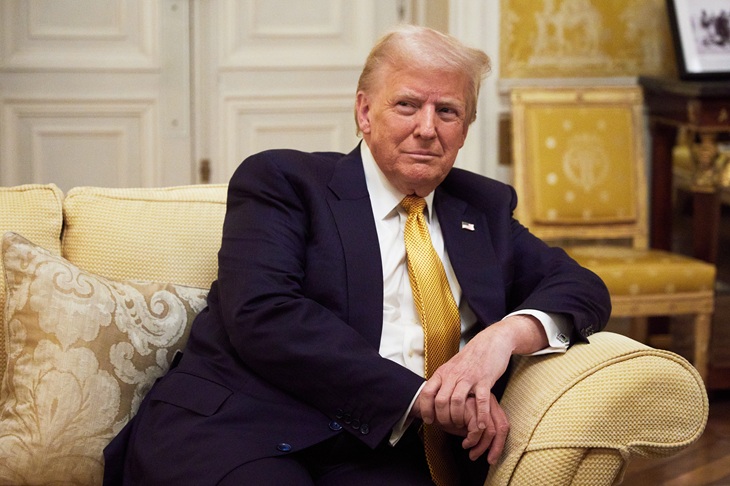



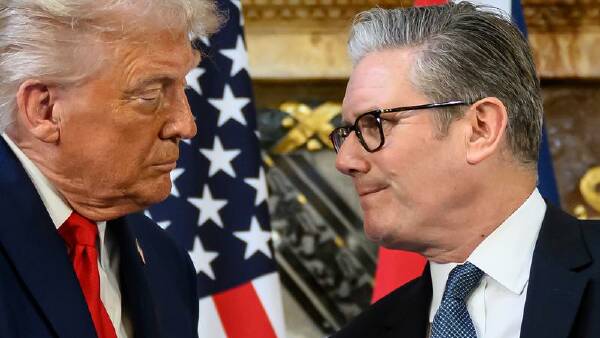
Donald Trump has sharply criticized British Prime Minister Keir Starmer, comparing him unfavorably to Winston Churchill over Britain’s limited support for US military actions in Iran. Speaking from the White House on Tuesday, Trump stated, “This is not Winston Churchill that we’re dealing with,” highlighting his dissatisfaction with the UK’s response to ongoing tensions in the region.
The comments came as Trump expressed frustration regarding the US air strikes against Iran, which have raised concerns among European allies. Some view the military campaign as reckless and potentially unlawful under international law. Trump’s remarks mark his third public criticism of Starmer this week, reinforcing a growing rift between the US and one of its closest allies.
In recent days, Trump and his aides have voiced discontent with European nations regarding various issues, including immigration policies and military spending commitments. The President’s stance on Ukraine and his previous threats to acquire Danish territory have further intensified fears about the stability of the transatlantic alliance amidst increasing threats from Russia.
During a meeting with German Chancellor Friedrich Merz, Trump announced plans to cut off all trade with Spain after the country denied the US military access to its bases for operations related to the strikes on Iran. “Spain has been terrible,” Trump told reporters, instructing Treasury Secretary Scott Bessent to sever all dealings with the nation. “We don’t want anything to do with Spain,” he added.
Starmer has defended Britain’s position, stating that the UK refrained from participating in the US-Israeli assault on Tehran due to the absence of a “viable, thought-through plan.” He emphasized that any military action must be responsible and not merely aimed at “regime change from the skies.” Despite this, Starmer has allowed the US to use British bases for what he described as limited and defensive strikes, following missile attacks on US allies in the region by Iran.
The situation escalated further when a British base in Cyprus was reportedly targeted by a drone, likely launched by the Iran-backed group Hezbollah. This incident underscores the rising tension in the region and the complexities surrounding military engagements.
Trump’s remarks included a specific complaint about logistical issues with the UK’s Diego Garcia air base, a strategically significant location for US military operations. “I’m not happy with the UK,” he stated during a press-accessible segment of his meeting with Merz. He expressed exasperation over delays in securing landing rights for US military jets, which he indicated could have been resolved more efficiently.
In a separate interview with the Telegraph, Trump noted that Starmer seemed “worried about the legality” of the strikes on Iran, further complicating the diplomatic landscape. Despite previous warm personal relations between Trump and Starmer, the current tensions reflect a shift in the dynamics of the US-UK partnership.
Historically, the relationship between the US and the UK has been characterized by strong leadership ties, with figures such as Churchill, Margaret Thatcher, and Tony Blair fostering robust connections with their American counterparts. The two nations’ “special relationship” encompasses extensive cooperation in military and intelligence sharing.
In light of the recent developments, Trump lamented the apparent decline of this partnership, stating, “It’s very sad to see that the relationship is obviously not what it was.” He expressed disappointment at witnessing Britain become a hesitant ally, contrasting this with his positive views of France and Germany.
As tensions rise, Britain, France, and Germany jointly released a statement in response to Iranian attacks, affirming their commitment to remain in close contact with the US, Israel, and regional partners. They called for a resumption of negotiations to address the ongoing conflict.