




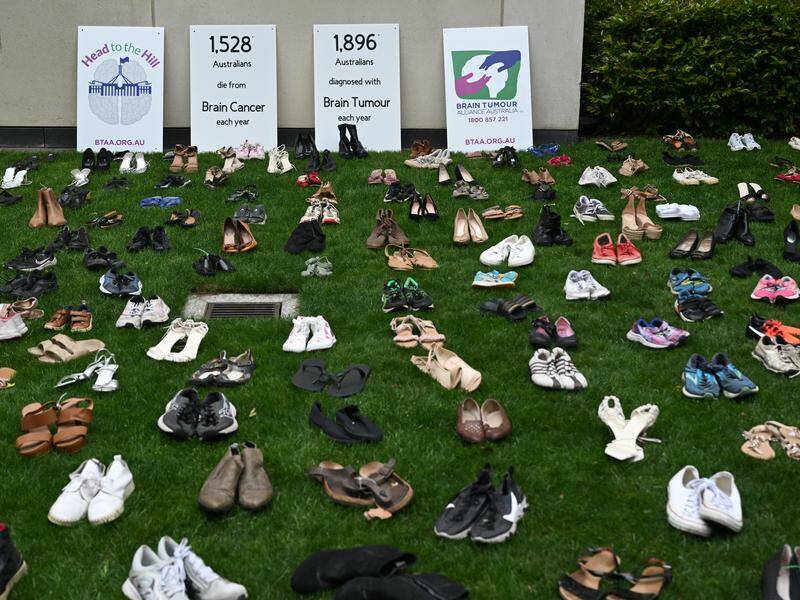
BREAKING: Hundreds of brain cancer patients and their families are demanding immediate government intervention following a shocking report revealing the devastating economic impact of this deadly disease. Earlier today, they joined renowned pathologist and former Australian of the Year, Richard Scolyer, at Parliament House in Canberra to advocate for urgent action against brain cancer, which is the leading cause of cancer-related deaths in Australians under 40.
Professor Scolyer, who has been battling glioblastoma since his diagnosis in 2023, emphasized the critical situation. Despite being given just six to eight months to live, he has survived for almost two years, highlighting the desperate need for improved survival rates. “It’s about 20 years and still less than five percent are surviving with the nastier types of brain cancer like the one I’ve got,” Prof Scolyer stated.
According to a report by the Brain Tumour Alliance Australia, the economic toll of brain cancer in Australia currently stands at $850 million and is projected to skyrocket to $3.2 billion annually by 2050 if decisive action is not taken. The alarming statistics paint a vivid picture of a crisis that cannot be ignored.
In a powerful visual demonstration, hundreds of pairs of shoes were left outside Parliament House, symbolizing the human cost of brain cancer. The collective voice of patients and advocates is clear: they are urging the government for a coordinated national response to tackle this urgent health crisis. Their demands include a substantial $200 million investment over the next decade to fund clinical trials and specialist care, as well as $8.75 million to support the training of 23 specialised brain cancer nurses.
The report highlights that survival rates for brain cancer have remained stagnant for the past two decades, a situation that is both unacceptable and tragic for families impacted by this disease. As the crisis unfolds, the push for increased funding and resources becomes more critical than ever.
The situation is developing rapidly, and the advocates are calling on citizens to raise their voices in support of this cause. Immediate action is necessary to improve outcomes for those battling brain cancer and to prevent further loss of life among young Australians.
As this story develops, the community’s response will be pivotal. The time for action is NOW. Share this urgent call for change and stand with those fighting against brain cancer.
