


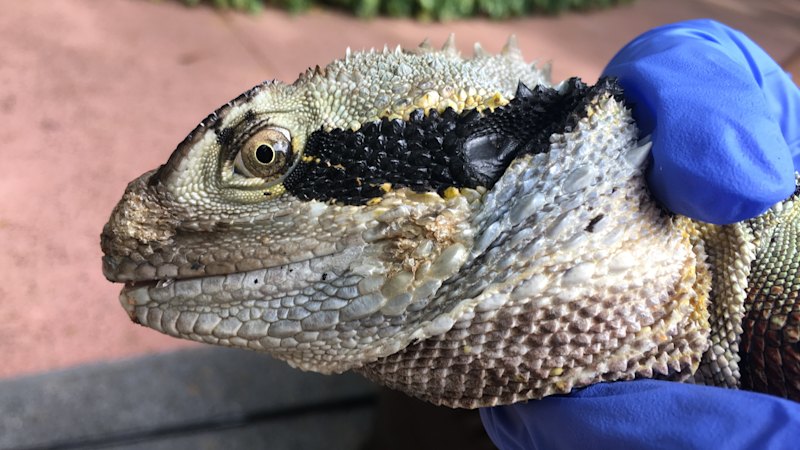
UPDATE: A shocking new report reveals that a mysterious fungal infection is posing a grave threat to Australian reptiles, particularly affecting lizards in Brisbane. The pathogen, known as Nannizziopsis barbatae, has been linked to alarming declines in local populations, raising urgent concerns among researchers.
The fungus was first identified in wild water dragons at Roma Street Parklands in 2013, but new findings indicate its spread may be more extensive than previously thought. According to Celine Frere, an Associate Professor at the University of Queensland, the infection has already impacted approximately 50% of the 400 water dragons inhabiting the park.
Research conducted by PhD student Sam Gallagher-Becker uncovered that the lizards are primarily contracting the fungus from their environment rather than from direct contact with one another. “Where you spend your time is more important than who you spend your time with,” Gallagher-Becker stated, emphasizing the environmental risks at play.
The presence of N. barbatae has been detected in soil samples throughout Brisbane, and similar infections have emerged in lizards located in Perth and the southwestern New South Wales town of Dubbo. This raises alarming questions about the fungus’s distribution across Australia and its potential to devastate reptile populations nationwide.
Frere highlighted the unique threat posed by fungi like N. barbatae, which can persist in environments without a host, leading to catastrophic impacts on biodiversity. “They can take out entire populations because they don’t need the host,” she warned. The fungus has the potential to affect nearly half of Australia’s roughly 1,000 reptile species, creating a situation where the loss of these species could be irreversible.
The situation echoes the devastating effects of a fungus called chytridiomycosis, which has been linked to the extinction of over 100 amphibian species globally. Frere, who was involved in the initial discovery of N. barbatae, expressed serious concerns about the lack of monitoring for this pathogen. “The unknown is what really worries us because we may be, as we speak, losing species or populations to extinction, but we have no idea,” she stated.
As researchers continue their investigation into this growing threat, they are calling on the public to report any sightings of infected lizards in their communities. Frere and Gallagher-Becker’s team are committed to understanding the full scope of this crisis and its implications for Australia’s unique wildlife.
WHAT’S NEXT: The urgency of this situation cannot be overstated. As officials and scientists work tirelessly to monitor and control the spread of N. barbatae, the public’s awareness and engagement will be crucial. Those who observe any signs of infection in local lizard populations are encouraged to reach out to the University of Queensland for further investigation.
This is a developing story, and updates will be provided as new information emerges. Stay tuned for the latest developments regarding this alarming threat to Australia’s reptiles.