



British and French warplanes conducted a coordinated air strike on an underground facility in central Syria, targeting suspected Islamic State (IS) operations. The strikes occurred on Saturday evening, specifically targeting a site located in the mountains just north of the historic town of Palmyra in Homs province. According to the British Ministry of Defence, the operation aimed to disrupt IS members believed to be storing weapons and explosives.
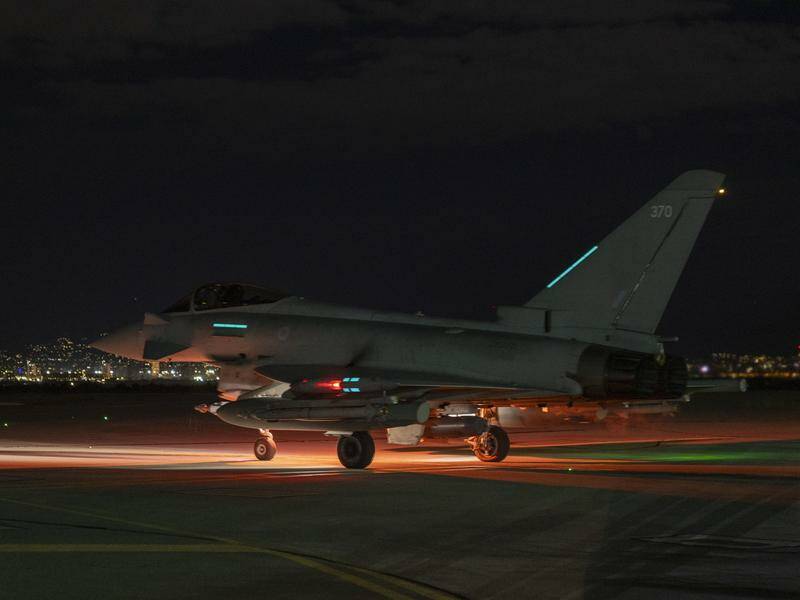
The British military deployed Typhoon FGR4 fighter jets, supported by a Voyager refuelling tanker, and was joined by French aircraft during the mission. The British forces utilized Paveway IV guided bombs to strike access tunnels leading to the facility. An official statement from the Ministry indicated that while a detailed assessment is currently underway, preliminary reports suggest “that the target was engaged successfully.”
Defence Secretary John Healey emphasized the significance of the operation, stating, “This action shows our UK leadership and determination to stand shoulder to shoulder with our allies, to stamp out any resurgence of IS and its violent ideologies in the Middle East.”
As of now, there has been no official response from Syria’s government regarding the air strikes. Notably, Syria joined the anti-IS coalition in late 2025. Although IS was declared defeated in Syria in 2019, the group continues to pose a threat through sleeper cells that are responsible for deadly attacks across Syria and Iraq, regions where they previously declared their caliphate.
According to United Nations experts, IS still commands an estimated 5,000 to 7,000 members within its former strongholds in both Syria and Iraq. In a related context, the Trump administration initiated military strikes in December in an effort to eliminate IS fighters and weapons sites following an ambush attack near Palmyra that resulted in the deaths of two U.S. troops and an American civilian interpreter.
This recent strike highlights ongoing international efforts to combat the resurgence of extremist groups in the region, illustrating the persistent challenges faced by coalition forces in maintaining stability in Syria and beyond.