

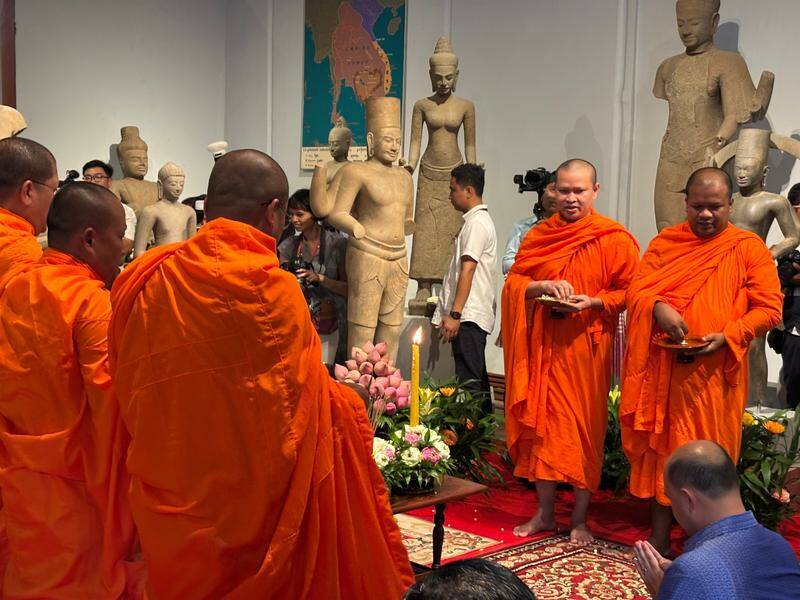
Cambodia has welcomed the return of 74 artefacts that represent a significant part of its cultural heritage. These items, looted during years of conflict and instability, were unveiled at a ceremony at the National Museum in Phnom Penh. The repatriation was formalized through a 2020 agreement between the Ministry of Culture and Fine Arts and the family of the late Douglas Latchford, a controversial art dealer implicated in smuggling artefacts out of the country.
The artefacts, which date back to both the pre-Angkorian period and the height of the Angkor Empire, include monumental sandstone sculptures, refined bronze works, and significant ritual objects. The Angkor Empire, which flourished from the ninth to the 15th century, is renowned for its archaeological site, Angkor Wat, Cambodia’s most prominent tourist attraction.
In a statement, the Ministry of Culture highlighted the importance of this restitution: “This substantial restitution represents one of the most important returns of Khmer cultural heritage in recent years, following major repatriations in 2021 and 2023 from the same collection.” The ministry emphasized that this return marks a significant step in Cambodia’s ongoing efforts to recover and preserve its ancestral legacy for future generations.
Douglas Latchford was a well-known antiquities dealer who faced accusations of orchestrating a scheme to sell looted Cambodian sculptures on the international market. During the civil wars and the Khmer Rouge regime from the 1970s to the 1980s, organized looting networks supplied artefacts to Latchford, who subsequently sold them to Western collectors, dealers, and institutions. Many of these pieces were damaged, having been forcibly removed from their original locations.
In 2019, Latchford was indicted in a New York federal court on charges including wire fraud and conspiracy. He passed away in 2020 at the age of 88, before he could stand trial. Cambodia’s experiences with cultural repatriation reflect a broader trend across Southeast Asia, where countries like Thailand have also benefited from the return of cultural treasures taken during periods of turmoil.
The return of these artefacts aligns with a growing global movement for the restitution of art and cultural items taken during conflict. Institutions such as the Metropolitan Museum of Art in New York have engaged in initiatives to return illegally smuggled artefacts to their countries of origin, including Cambodia.
During the ceremony, Deputy Prime Minister Hun Many, the younger brother of Prime Minister Hun Manet, expressed his gratitude for the artefacts’ return. “The ancient artefacts created and preserved by our ancestors are now being returned to Cambodia, bringing warmth and joy, following the country’s return to peace,” he stated.
This significant event not only marks a milestone in cultural restoration but also reinforces Cambodia’s dedication to preserving its rich heritage. As the country continues to recover from decades of conflict, the repatriation of these artefacts serves as a poignant reminder of the importance of cultural identity and the ongoing efforts to restore what has been lost.