


The recent arrest and deportation of Venezuelan President Nicolás Maduro by the United States has sparked a wide range of reactions from world leaders, highlighting a deep divide in international perspectives on U.S. foreign policy. The operation, characterized by some as an act of unauthorized aggression, has drawn sharp criticism from leaders in Latin America and beyond, while others have expressed support for the U.S. actions.
Several Latin American leaders have vocally condemned the U.S. operation. A coalition including Brazil, Chile, Colombia, Mexico, and Uruguay, along with Spain, issued a joint statement asserting that the U.S. raid violated “basic principles of international law,” specifically the prohibition on the use of force and the respect for territorial sovereignty as outlined in the United Nations Charter. The leaders emphasized that the ongoing crisis in Venezuela should be resolved through dialogue and respect for the will of the Venezuelan people, free from external interference.
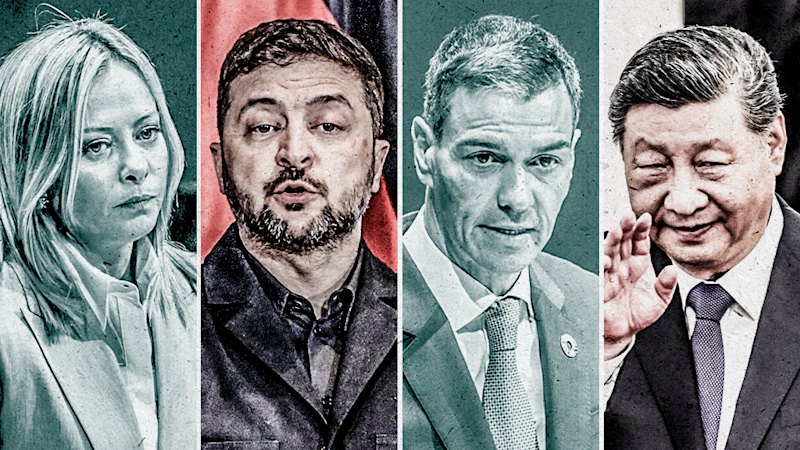
In a notable response, Spain’s Prime Minister Pedro Sánchez has emerged as a vocal critic of U.S. aggression, particularly since Donald Trump resumed office. His government’s stance reflects a broader sentiment among left-leaning leaders in the region, who prioritize sovereignty over the removal of Maduro. Notably, Claudia Sheinbaum, the President of Mexico, echoed this sentiment, expressing concern for her nation’s sovereignty while maintaining a working relationship with the U.S.
Further afield, several Southeast Asian nations have also expressed disapproval of the U.S. raid. Indonesia articulated its “grave concern” regarding actions that could set a dangerous precedent in international relations. The Indonesian Ministry of Foreign Affairs emphasized the importance of diplomacy and respect for sovereignty. Similarly, Singapore reiterated its commitment to international law, urging all parties involved to exercise restraint.
Malaysia’s Prime Minister Anwar Ibrahim, who hosted Trump last October, criticized the military intervention, stating that it undermines the legal framework governing international relations. “The forcible removal of a sitting head of government through external action sets a dangerous precedent,” he stated, calling for the immediate release of Maduro and his wife.
Contrastingly, reactions from the political right have generally been supportive of the U.S. actions. Javier Milei, the President of Argentina and a supporter of Trump, hailed Maduro’s ousting as a positive development for the free world. He stated that it represented the collapse of a dictatorship that had manipulated elections. Daniel Noboa, Ecuador’s right-wing president, echoed this sentiment, suggesting that it marks a turning point for the region.
In Europe, Georgia Meloni, the Italian Prime Minister, characterized the U.S. raid as “legitimate,” although she acknowledged that military intervention is typically not the preferred approach to addressing totalitarian regimes. Meanwhile, Volodymyr Zelensky, the President of Ukraine, welcomed the news, viewing it as an opportunity to challenge dictators.
China’s response was particularly critical, with Beijing expressing deep shock and strong condemnation of the U.S. actions against a sovereign nation. The Chinese government, which relies heavily on Venezuelan oil, framed the operation as an infringement on national sovereignty, reflecting its broader strategic interests in countering U.S. influence.
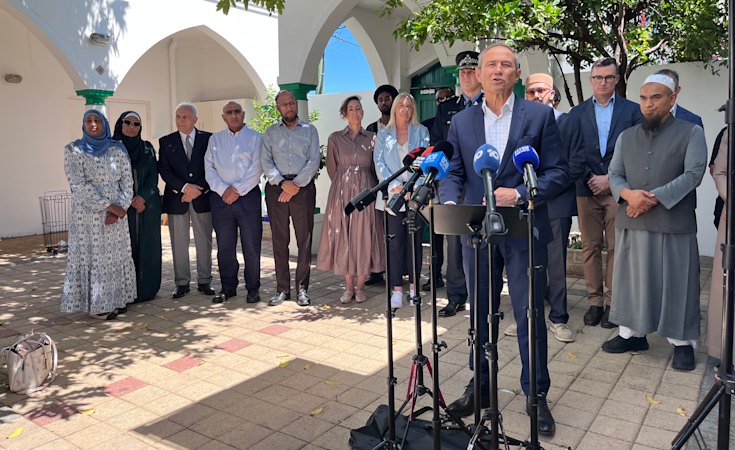
As debates continue, leaders like Anthony Albanese of Australia have adopted a cautious approach, indicating that his government is monitoring developments while advocating for de-escalation. British Prime Minister Keir Starmer has also called for a thorough examination of the facts before forming a definitive opinion.
The varied responses underscore the complexities of international relations as nations grapple with the implications of unilateral military actions by a global superpower. The situation remains fluid, with potential ramifications for both regional stability and the established norms of international law.