

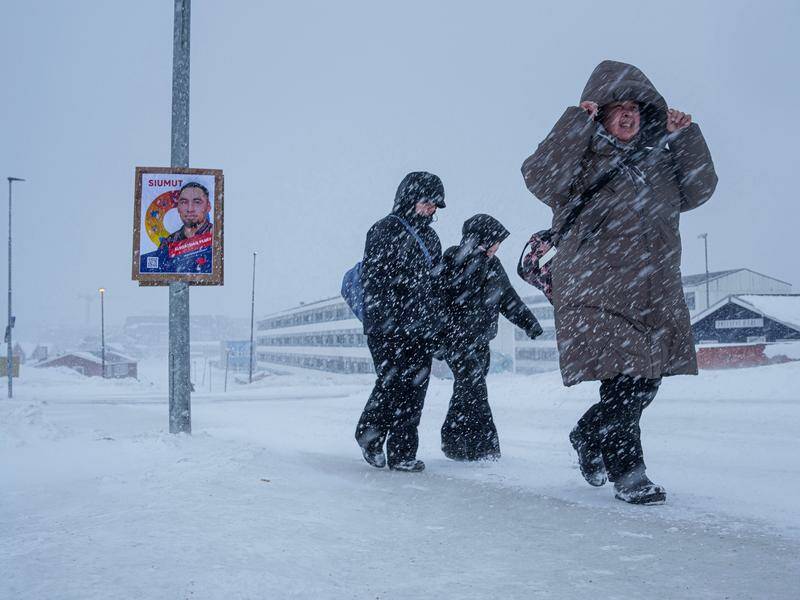
Greenland’s opposition leader, Pele Broberg, has called for direct negotiations with the United States government, excluding Denmark from the process. This statement comes as the Arctic island grapples with President Donald Trump’s renewed interest in its political status and resources. Broberg, who heads the opposition party Naleraq, argues that Greenland should engage with the U.S. independently to address its future and leverage its strategic location.
Greenland, situated between Europe and North America, plays a crucial role in U.S. military strategy, particularly for its ballistic missile defence system. Its abundant mineral resources align with Trump’s goal of decreasing reliance on China. Although Greenland is an autonomous territory within the Kingdom of Denmark, it has its own parliament and government, with Denmark overseeing foreign affairs and defence.
Calls for Independence and Negotiation
“We encourage our current Greenlandic government to have a dialogue with the U.S. government without Denmark,” Broberg stated. He expressed that Denmark’s mediation could be counterproductive, suggesting it “antagonises both Greenland and the U.S.” The Naleraq party, which advocates for Greenland’s swift move towards full independence, saw a significant increase in support during the last election, securing 25 percent of the vote and doubling its parliamentary seats to eight in a territory of just 57,000 residents.
Despite being in opposition, Naleraq has proposed a defence agreement with the U.S. that could lead to a “free association” arrangement. This would allow Greenland to receive U.S. support and protection in exchange for military access, without formally becoming a U.S. territory. While there is a consensus among Greenlandic parties regarding independence, opinions differ on the timing and approach.
Legal Constraints and Ongoing Diplomacy
Greenlandic Foreign Minister Vivian Motzfeldt has countered Broberg’s proposal, asserting that direct talks with the U.S. cannot occur without Denmark, citing legal restrictions. “We must respect the law, and we have rules for how to resolve issues in the Kingdom,” she remarked in an interview with the publication Sermitsiaq.
The Danish and Greenlandic governments have not yet responded to Broberg’s comments. This dialogue comes ahead of a scheduled meeting involving the Danish and Greenlandic foreign ministers and U.S. Secretary of State Marco Rubio, aimed at addressing tensions among NATO allies. Motzfeldt expressed hope that this meeting would help establish a stable relationship between Greenland and the United States.
According to Ulrik Pram Gad, a senior researcher at the Danish Institute for International Studies, both Denmark and Greenland are working to redirect the discussion towards diplomatic channels. “The strategy is to get Trump’s undiplomatic social media statements put back into stabilised diplomatic channels,” he noted.
In a related development, NATO ambassadors recently held discussions in Brussels regarding Greenland’s strategic importance. Reports indicate a consensus on the need for enhanced Arctic security measures, with plans for further steps still under consideration. Some member states have suggested that NATO’s existing operations on its eastern flank could serve as models for future initiatives in the region.
As Greenland navigates its complex relationship with both Denmark and the United States, the calls for independence and direct negotiations signal an evolving political landscape that will likely have significant implications for its future.