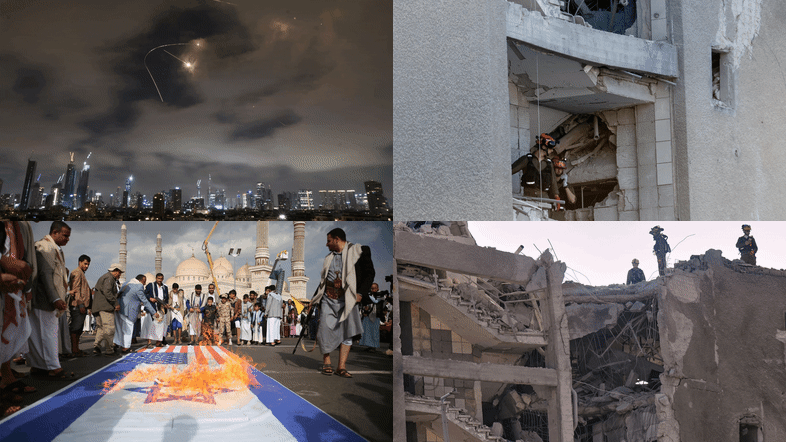




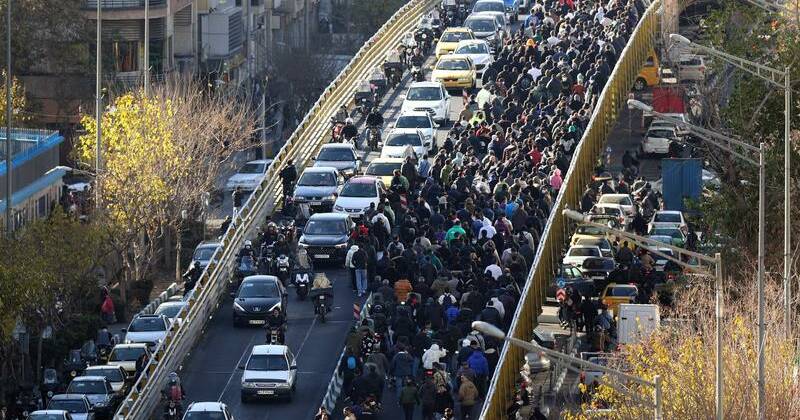
Protests have erupted across Iran, ignited by a call from the exiled Crown Prince Reza Pahlavi, despite the government’s efforts to suppress dissent through internet blackouts and restrictions on communication. As crowds gathered in cities including Tehran, demonstrators expressed anger against the ruling government, chanting slogans that have not been heard on such a scale for years.
In response to the unrest, which began on December 28, 2022, Iranian state media reported on Friday that authorities would take strong measures against what they termed “terrorist agents” supposedly acting at the behest of the United States and Israel. These statements came amid claims of casualties from the protests, although specific details remain unclear. Ayatollah Ali Khamenei, the country’s supreme leader, addressed the nation, stating that protesters were “ruining their own streets to make the president of another country happy,” a reference to US President Donald Trump.
The protests have escalated, with reports indicating at least 42 fatalities and over 2,270 arrests according to the Human Rights Activists News Agency. This unrest marks a significant challenge to Iran’s theocratic regime, shifting from initial grievances about economic hardship to broader calls for political change. The Iranian rial has plummeted, trading at 1.4 million IRR to $1 USD, exacerbating public dissatisfaction.
The demonstrations have been characterized by cries for freedom and support for the monarchy, as chants of “Death to the dictator!” and “Death to the Islamic Republic!” echoed through the streets. Witnesses reported that when the clock struck 20:00 on Thursday, neighborhoods across Tehran became alive with voices demanding change, following Pahlavi’s call for protests at that time.
International Reactions and Future Implications
Pahlavi, whose father fled Iran before the 1979 Islamic Revolution, has re-emerged as a symbolic figure for those desiring a return to a monarchy. He has urged European leaders to align with Trump in holding the Iranian regime accountable for its actions against protesters. His ties with Israel and the West have drawn scrutiny, particularly following a recent conflict between Israel and Iranian-backed forces.
Trump’s statements have added another layer to the situation, warning that if Iran “violently kills peaceful protesters,” the United States would intervene. This rhetoric reflects a growing international concern over human rights violations in Iran as the government reacts to dissent.
The Iranian state media’s acknowledgment of the protests marks a notable shift, as it represents the first official commentary on the unrest. Despite the government’s narrative of foreign instigation, the sustained nature of the protests suggests deep-rooted discontent within the Iranian populace.
As the situation continues to evolve, the full scope of the protests remains difficult to ascertain due to ongoing communication restrictions. Nevertheless, the potential for significant political change in Iran looms as citizens demand their rights and the government grapples with the consequences of its crackdown.