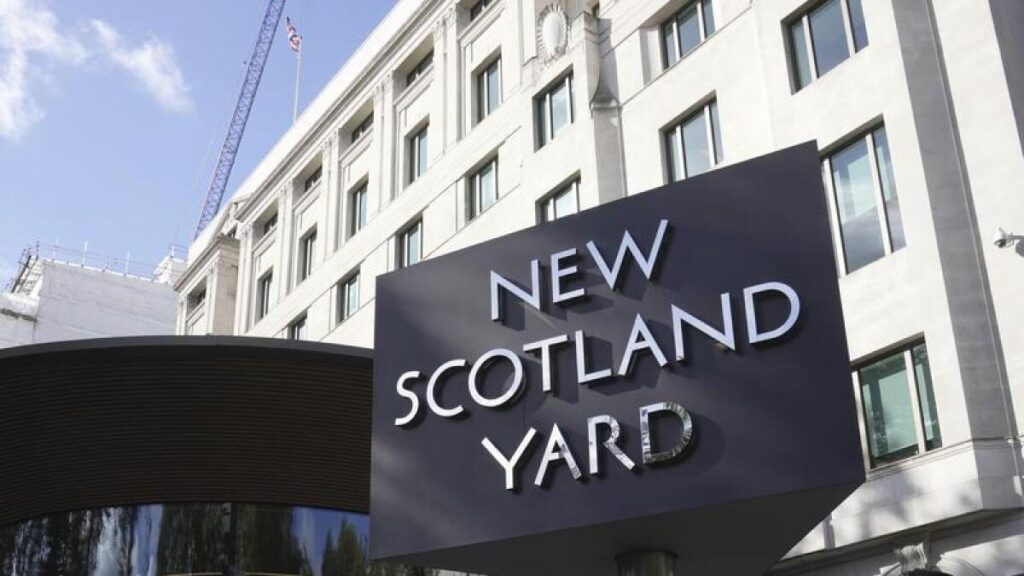
Two individuals were arrested in London for shouting slogans that included calls for “intifada,” according to a statement from the Metropolitan Police on social media. These arrests are categorized as racially aggravated public order offences. A third person was also taken into custody for obstructing officers during the incident. The demonstration, which attracted approximately 100 participants, concluded shortly after the initial arrests.
The police action follows remarks made by Chief Rabbi Ephraim Mirvis, who commended both the Metropolitan Police and Greater Manchester Police for their decision to adopt a more proactive stance against such slogans. This shift in policy comes in light of recent terrorist attacks in Sydney and Manchester, heightening concerns over public safety. Rabbi Mirvis described the new approach as “an important step towards challenging the hateful rhetoric” that has emerged on the streets of the UK.
In a joint statement, Met Commissioner Mark Rowley and GMP Chief Constable Stephen Watson addressed the growing alarm within communities regarding chants like “globalise the intifada.” They asserted that individuals using these phrases in future protests can expect police action. They emphasized, “Violent acts have taken place; the context has changed—words have meaning and consequence. We will act decisively and make arrests.”
The police leaders acknowledged that, historically, many phrases causing distress within Jewish communities did not meet the legal thresholds for prosecution. However, they indicated that the current “escalating threat” necessitates a recalibration of their approach to be more assertive.
While the decision was welcomed by Jewish organizations, it has drawn criticism from groups advocating for Palestinian rights. Ben Jamal from the Palestine Solidarity Campaign stated that the police’s stance infringes upon the fundamental right to protest. He indicated that the police did not consult with key representatives of the Palestinian community before making such a significant declaration.
Jamal noted that the term “intifada,” which translates to “shaking off” or “uprising against injustice,” has historical roots in peaceful protests during the first intifada. He argued that the implication of these slogans being solely interpretable by groups supporting Israel’s policies is deeply problematic.
The recent arrests highlight a growing tension between public safety measures and the right to free expression in the context of ongoing political conflicts. As authorities adjust their strategies in response to evolving threats, the implications for public demonstrations remain a critical area of concern for both activists and law enforcement.
As discussions continue, the balance between maintaining public order and upholding civil liberties will likely remain a contentious issue in the UK.