


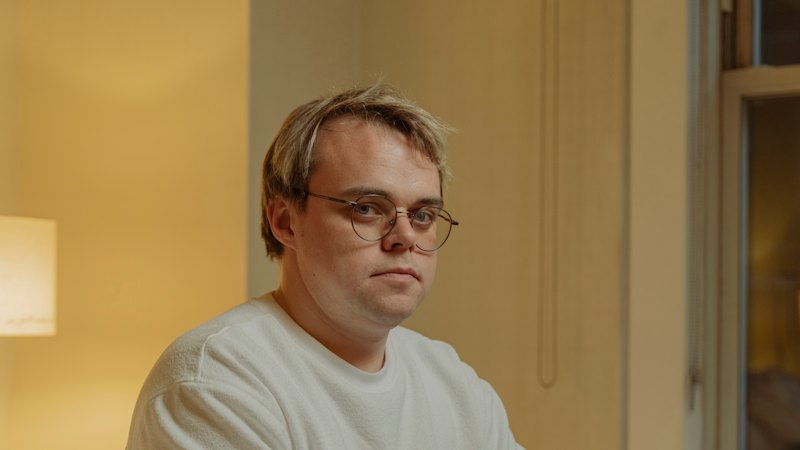
Pavel Talankin, a former educator from School No. 1 in Karabash, Russia, has become a focal point in documenting the government’s shift towards militarized education following the invasion of Ukraine in February 2022. Aged 34, Talankin had spent most of his life in this small industrial town, known for its population of around 10,000, where he first attended school and later coordinated events. His role transformed dramatically when the Russian government mandated a new curriculum designed to instill patriotic fervor in students.
Before the war, Talankin was known for fostering a creative environment at School No. 1. He organized holiday celebrations, graduation ceremonies, and even a comedy club, capturing these moments for the school’s archives. Talankin described his office as a sanctuary where students could relax, play music, and engage in meaningful conversations. “I loved this place,” Talankin stated. “I loved what we were doing before the war.”
The situation shifted abruptly after the invasion, as the Russian Education Ministry introduced a curriculum that included activities such as grenade-throwing competitions and lectures promoting loyalty to the state. One chilling instance involved mercenaries from the Wagner Group teaching students about mine identification and survival tactics. Talankin was instructed to film these sessions and upload them to a government database to demonstrate compliance with the new directives.
In an unexpected turn, the footage he captured became pivotal for the documentary *Mr Nobody Against Putin*, which is now competing for an Academy Award. While the Russian government has publicized its patriotic education initiatives, it has largely ignored the implications of the film. Talankin reflected on his experience, noting that he felt like an “overseer” while filming lessons filled with propaganda, realizing he was documenting history in real-time.
Talankin’s mother, Antonina Talankina, a librarian at the same school, expressed pride in her son while also highlighting a complex family dynamic. Despite her support for President Putin, she instilled in Pavel a sense of questioning authority, often sharing stories of their family’s past, which included persecution during Stalin’s regime. This upbringing contributed to Talankin’s eventual disillusionment with the state.
After observing the drastic changes in his school environment, Talankin reached out to American filmmaker David Borenstein, who had been alerted to his situation through social media. Despite concerns over potential repercussions from Russian security services, Talankin decided to collaborate with Borenstein, continuing to film while navigating the challenges of government oversight.
Throughout this process, he was compelled to share access to the school’s social media accounts with local authorities, which were then used for military recruitment propaganda. Talankin noted that such measures effectively turned students and teachers into “Kremlin bots,” as they were pressured to promote government messages on their personal platforms.
In June 2024, after a final graduation party, Talankin made the decision to leave Russia. He took only a suitcase filled with hard drives, embarking on what he initially described as a week-long holiday in Turkey. This journey marked his first time outside of Russia, leading to a meeting with Borenstein, where he learned he was prominently featured in the documentary.
The film premiered at the Sundance Film Festival in January 2025, where it won the special jury award. However, the aftermath was fraught with challenges for Talankin. He received backlash from his community, being labeled a “traitor” and “Judas” by some. Following the film’s release, Russian security services pressured teachers at his former school to sever ties with him, leading many to comply.
While some parents expressed shock at the propaganda revealed in the film, Talankin lamented that many students had become desensitized to the messaging, illustrating the deep impact of state-sponsored narratives on young minds. His mother, remaining in Karabash, faced the fallout of her son’s actions, noting the stigma surrounding discussions of him within their community.
As Talankin navigated his new life in exile, he received political asylum in July 2025, allowing him to travel and share his experiences with broader audiences. He now sees the relevance of his story extending beyond Russia, warning others about the dangers of apathy and self-censorship in the face of authoritarianism.
“Sooner or later, people will ask themselves, ‘What’s going on with the Russians? Why are they all so angry and aggressive again?’” Talankin remarked. “Because they go to school and are told that killing is normal.” His reflections not only capture the stark realities faced by educators and students in Russia but also serve as a cautionary tale for those observing from afar.
*Mr Nobody Against Putin* is currently available for streaming on DocPlay.