In a significant escalation of military posturing, Iran recently conducted live-fire drills in the Strait of Hormuz, a vital waterway through which approximately a fifth of the world’s oil supply is transported. This military exercise comes at a time when tensions between Iran and the United States remain high, particularly as President Donald Trump has hinted at potential military action should negotiations falter.
On January 8, 2023, Trump indicated on his Truth Social platform that if Iran does not engage constructively in ongoing nuclear talks, the United States may need to utilize military bases such as Diego Garcia and the airfield in Fairford to counter threats from what he described as a “highly unstable and dangerous regime.” This statement underscores the precarious balance in the region as the US increases its military presence.
Military Drills and Domestic Unrest
Iran’s recent military drills involved not only Iranian forces but also Russian sailors, with operations conducted in the Gulf of Oman and the Indian Ocean. The objective, according to the state-run IRNA news agency, was to enhance operational coordination and share military experiences. Although China has participated in these drills in the past, its involvement in this latest exercise has not been confirmed.
The backdrop to these military exercises includes significant domestic unrest within Iran. Following a brutal crackdown on protests, mourners have been holding ceremonies to honor those killed by security forces, marking 40 days since their deaths. Reports indicate that these gatherings have included anti-government sentiments, despite the government’s warnings against dissent.
The protests initially erupted on December 28, 2022, at Tehran’s historic Grand Bazaar, driven by economic grievances related to the dramatic collapse of the national currency. The demonstrations escalated, particularly after calls for action from exiled political figures such as Reza Pahlavi. The Iranian government has reported a death toll of 3,117 due to the violence, while the Human Rights Activists News Agency claims the number exceeds 7,000.
US Military Movements and Regional Implications
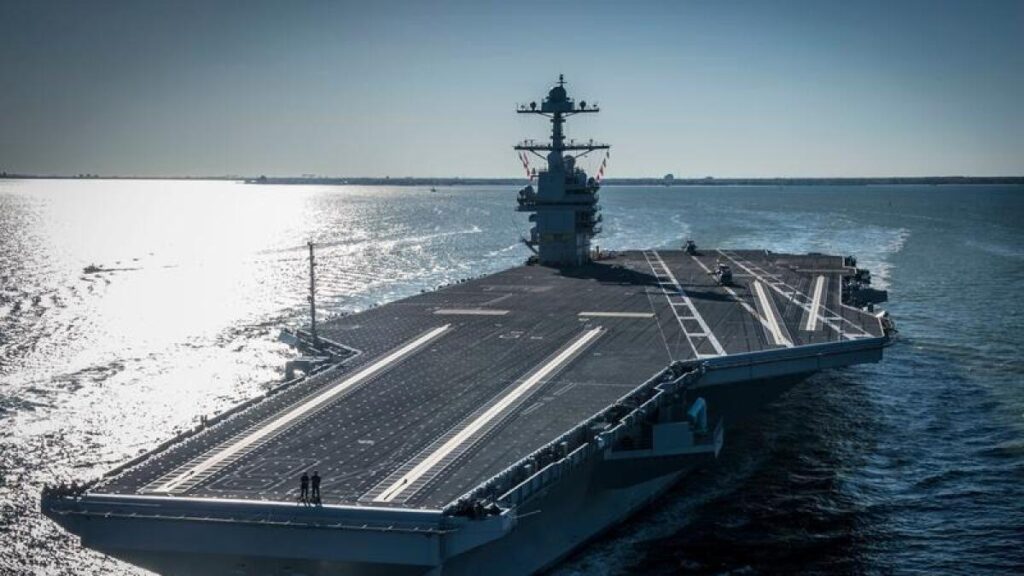
In response to the heightened tensions, the United States has repositioned warships and aircraft in the region. The USS Ford, a nuclear-powered aircraft carrier, was reportedly sighted off the coast of Morocco, positioning it for potential deployment to the eastern Mediterranean. This move could enhance the US military’s capacity to support allies such as Israel and Jordan in the event of an escalation with Iran.
Previously, US naval forces had been deployed to the region during the conflict involving Israel and Hamas, further highlighting the strategic importance of American military presence in countering perceived threats from Iran.
As the situation evolves, both military and diplomatic channels will be closely monitored. The stakes remain high, not just for US-Iran relations, but for the broader stability of the Middle East, where Iran’s actions and the US’s responses could have far-reaching consequences.