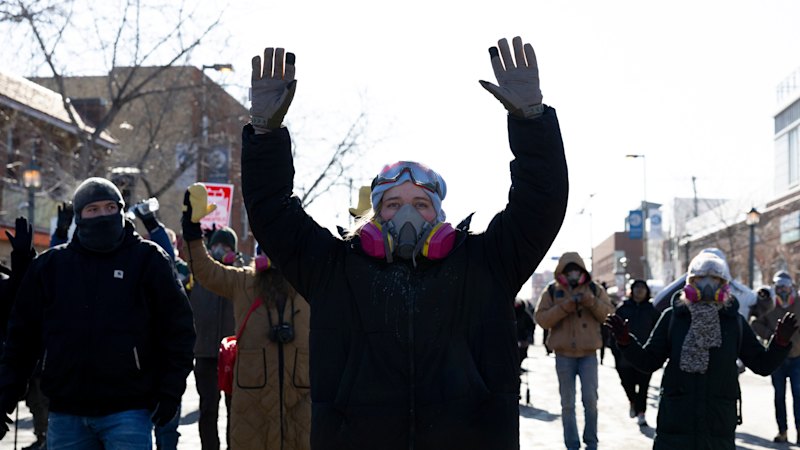
A recent surge in violent confrontations between federal agents and protesters in Minneapolis has raised serious concerns about the use of deadly force by law enforcement. In just three weeks, two individuals have been killed during clashes with Immigration and Customs Enforcement (ICE) agents, igniting a national debate about the implications of the Second Amendment and the rights of citizens to protest against governmental actions.
The tensions can be traced back to statements made by conservative activist and ally of former President Donald Trump, Charlie Kirk, in 2018. Kirk asserted that the Second Amendment was meant to empower citizens to defend themselves against a tyrannical government. Following his death last year, his words have taken on new meaning as protests against federal immigration policies escalate.
In recent incidents, families of the deceased, including Alex Pretti, have expressed their grief, describing their loved ones as passionate individuals who were unwilling to stand idly by as community members were apprehended by masked law enforcement. In stark contrast, officials have labeled these individuals as “domestic terrorists,” justifying their deaths through claims of imminent danger to ICE agents.
The discourse surrounding these events has been contentious. Vice President JD Vance and other officials have defended the actions of the agents, asserting that they are entitled to “absolute immunity” when executing their duties. Such rhetoric has resulted in an environment where aggression and violence appear to be escalating, with tragic outcomes.
On January 7, Renee Good was killed in a similar confrontation. The administration has leaned on the fact that Pretti was licensed to carry a firearm, suggesting that he posed a threat, which led to the defensive shooting by an agent. The key question remains whether Pretti was brandishing his weapon at the time of the incident. Kristi Noem, Secretary of Homeland Security, avoided directly addressing the issue, indicating only that Pretti “showed up” with a gun.
Witness accounts and video footage have complicated the narrative. Some observers claim that Pretti was attempting to secure his weapon while being restrained by multiple agents. This ambiguity raises important questions about the justification of the agents’ use of lethal force.
The underlying principle being presented by the Trump administration suggests that individuals who engage in protests against law enforcement should anticipate violent repercussions. This has drawn criticism from various sectors, including the National Rifle Association (NRA). The NRA publicly condemned comments made by Bill Essayli, a Trump appointee, who stated that approaching law enforcement with a firearm increases the likelihood of being shot. The NRA labeled this sentiment as “dangerous and wrong,” advocating for a thorough investigation rather than broad generalizations that demonize law-abiding citizens.
Public sentiment regarding ICE’s tactics appears to be shifting. A recent poll conducted by The New York Times and Siena College indicates that a majority of Americans believe ICE has overstepped its bounds, even as they support stricter immigration measures. Notably, the same poll revealed that 56 percent of Republican voters feel ICE’s actions are justified, illustrating the deep divisions within American society.
As the nation grapples with these events, the stark polarization of opinions continues to hinder constructive dialogue. The contrasting interpretations of video evidence and personal narratives underscore a society increasingly divided along ideological lines. It remains uncertain how this situation will evolve and what measures, if any, will be taken to address the underlying issues of police accountability and citizens’ rights to protest.
With tensions high and communities impacted by these tragic events, the debate over the right to bear arms and the responsibilities of law enforcement will likely remain a focal point in American discourse.