



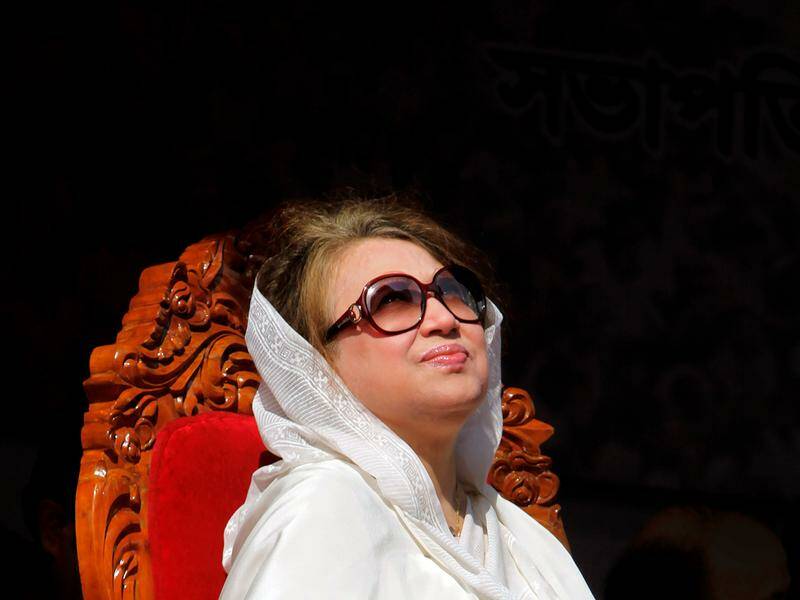
Thousands of mourners gathered outside Bangladesh’s national parliament building in Dhaka on March 15, 2024, to pay their respects to former Prime Minister Khaleda Zia, who passed away the previous day at the age of 80 after a prolonged illness. The scene was marked by deep emotion, as supporters described Zia as their “mother” while flocking to the venue on Manik Mia Avenue from early morning.
People traveled from various regions, including rural areas, many having journeyed overnight for the funeral prayers. Witnesses reported that crowds spilled into nearby streets, with thousands raising their hands in prayer, creating a sea of solemnity and remembrance.
Significant Attendance and Tributes
Zia’s funeral attracted an estimated hundreds of thousands of supporters, alongside dignitaries from neighboring countries such as India, Pakistan, Sri Lanka, and Nepal. Local media noted the presence of foreign envoys and representatives from 32 nations who attended the ceremony. Among the notable attendees was S Jaishankar, India’s External Affairs Minister, who met with Zia’s elder son, Tarique Rahman, delivering a personal letter from Indian Prime Minister Narendra Modi.
Other dignitaries included Pakistan’s National Assembly Speaker Sardar Ayaz Sadiq, Nepal’s Foreign Minister Bala Nanda Sharma, and Bhutan’s Minister for Foreign Affairs and External Trade Lyonpo DN Dhungyel, all of whom came to pay their respects to the late leader.
Burial and Political Legacy
Zia was laid to rest on the afternoon of March 15, 2024, with state honors beside the grave of her husband, a former president who was assassinated in a military coup in 1981. An honor guard of soldiers saluted as family members stood nearby, emphasizing the significance of the moment.
Entering politics after her husband’s death, Zia became a prominent opposition leader during a nine-year movement against a former military dictator, culminating in a mass uprising that led to democracy in Bangladesh in 1990. She first became Prime Minister in 1991, winning a landslide victory in the country’s first democratically held election.
Throughout her political career, which spanned over 40 years, Zia led the Bangladesh Nationalist Party and maintained a significant rivalry with her archrival, former Prime Minister Sheikh Hasina. Hasina ruled Bangladesh for 15 years before being ousted in a mass uprising in 2024.
Following Zia’s death, Bangladesh’s interim government, led by Nobel Peace laureate Muhammad Yunus, announced a three-day mourning period and declared March 15 a public holiday. Flags were flown at half-staff across the nation in honor of Zia, who was the country’s first female prime minister, having served two full terms and a brief term.
Tarique Rahman, Zia’s son, currently serves as the acting head of the Bangladesh Nationalist Party, which is positioned as a frontrunner in the upcoming elections scheduled for February 2025. Meanwhile, Sheikh Hasina has been in exile in India since August 5, 2024, following a death sentence handed down in November for crimes against humanity related to the 2024 uprising.
The deep outpouring of grief and respect for Khaleda Zia reflects her lasting impact on Bangladesh’s political landscape and the hearts of many citizens.