Indirect negotiations between the United States and Iran regarding Tehran’s nuclear program commenced in Geneva, marking a critical juncture for diplomacy. The talks begin as the United States has mobilized a fleet of aircraft and warships to the Middle East, a move that underscores the pressure on Iran to reach an agreement.
US President Donald Trump is keen on constraining Iran’s nuclear activities, particularly as the country grapples with internal unrest following nationwide protests in January. Iran, on its part, insists on its right to enrich uranium, despite the challenges it faces after a US military strike in June 2025 that damaged several of its nuclear facilities.
Tensions escalated further when Iranian officials declared that any American military action would render US bases in the Middle East legitimate targets, endangering tens of thousands of American troops. Furthermore, Iran has threatened to retaliate against Israel, raising concerns over the potential for a broader regional conflict. Iranian Foreign Minister Abbas Araghchi emphasized the dire consequences of war, stating, “There would be no victory for anybody – it would be a devastating war.”
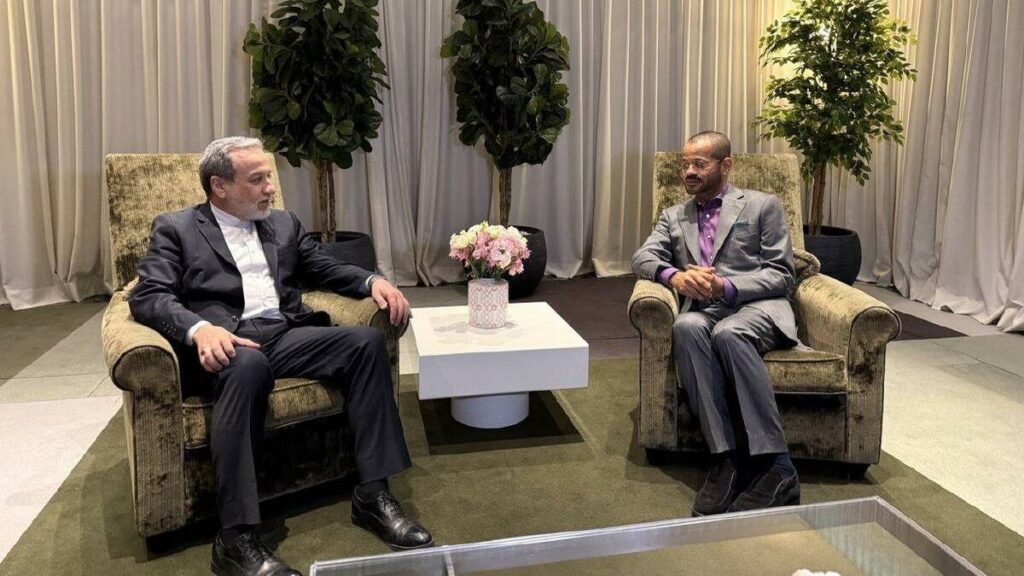
The negotiations have been facilitated by Oman, a nation known for its role as an intermediary between Iran and Western powers. Upon arriving in Geneva, Araghchi met with Oman’s Foreign Minister Badr al-Busaidi to discuss Iran’s proposals aimed at reaching an agreement based on prior discussions. Reports from the state-run Oman News Agency indicated that both sides are reviewing the framework established in earlier rounds of talks.
On Thursday, a convoy believed to be carrying American diplomats arrived at the Omani diplomatic residence by Lake Geneva, followed closely by Iranian diplomats. Images released by Oman showed Witkoff and Jared Kushner, Trump’s son-in-law, engaging with al-Busaidi, a sign that the talks were officially underway.
The current negotiations are set against the backdrop of Iran’s nuclear ambitions. Trump has called for an end to Iran’s uranium enrichment and has sought to address the country’s ballistic missile program and its support for regional militant groups. In contrast, Iran asserts that discussions should focus solely on nuclear matters.
US Secretary of State Marco Rubio highlighted concerns over Iran’s nuclear activities, stating, “Iran was always trying to rebuild elements of its nuclear program.” While Iranian officials claim they have not enriched uranium since June, they have obstructed access for inspectors from the International Atomic Energy Agency (IAEA) to the sites damaged in the June attacks.
The IAEA and Western nations maintain that Iran had a nuclear weapons program until 2003 and was enriching uranium to levels of up to 60 percent purity prior to the June military action, which is alarmingly close to weapons-grade purity of 90 percent. Although US intelligence suggests Iran has not restarted a weapons program, it acknowledges that the country has engaged in activities that could enable it to produce a nuclear device if it chooses.
As the discussions unfold in Geneva, the stakes are high. The outcome of these talks could significantly influence the geopolitical landscape of the Middle East and beyond. The world is watching closely as both nations navigate this fraught diplomatic terrain.