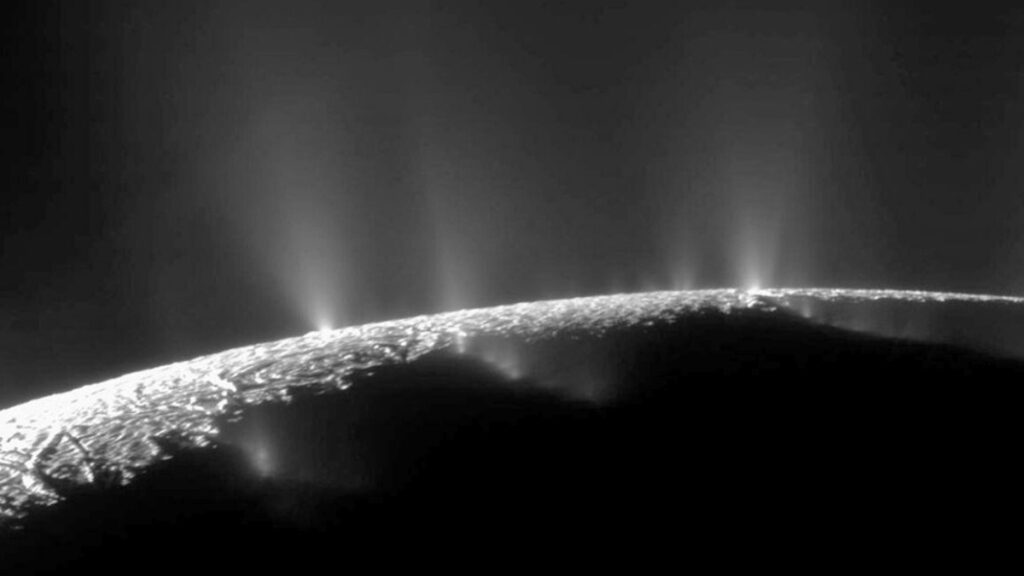
A groundbreaking discovery has revealed a vast network of hidden electromagnetic waves surrounding Europa, a tiny ice-covered moon of Jupiter. This phenomenon extends over an astonishing 500,000 kilometers, significantly surpassing the moon’s own dimensions. The findings, published in October 2023 by researchers at the University of California, Berkeley, could reshape our understanding of electromagnetic activity in the solar system.
The electromagnetic waves were detected using data from NASA’s Juno spacecraft, which has been studying Jupiter and its moons since 2016. Scientists initially aimed to analyze the magnetic field of Jupiter itself but stumbled upon the unexpected waves surrounding Europa. The discovery highlights the complexity of the interactions between celestial bodies and their environments.
Implications for Future Research
This newly identified electromagnetic activity may have significant implications for future explorations of Europa. The moon is already a prime candidate in the search for extraterrestrial life due to its subsurface ocean, which lies beneath its thick icy crust. Understanding how the electromagnetic waves interact with the moon’s ice and ocean may provide insights into its potential habitability.
According to Dr. David F. W. H. T. S. T. K. J. E. S. K. D. E. Y. T. R. D. R. H. C. E. M. P. W. H. S. H. S. E. R. T., a lead researcher on the study, “These findings open up new avenues for exploring how electromagnetic forces can influence the ocean beneath Europa’s ice.” The research emphasizes the need for future missions that can delve deeper into the moon’s geological and oceanic properties.
The discovery also contributes to the broader field of planetary science, where understanding electromagnetic phenomena can shed light on the dynamics of various celestial environments. The research team plans to further investigate these waves and their potential effects on Europa’s surface and subsurface.
Next Steps for Exploration
Moving forward, NASA is expected to incorporate these findings into its upcoming missions, particularly the Europa Clipper, scheduled for launch in the 2020s. This mission aims to conduct detailed reconnaissance of Europa’s ice shell and subsurface ocean, as well as assess its habitability.
The implications of these electromagnetic waves extend beyond just Europa. The findings could inform scientists about similar moons and planets across our solar system, enhancing our understanding of their electromagnetic environments. As research continues, the potential for groundbreaking discoveries in astrobiology and planetary science grows.
In summary, the detection of this extensive web of electromagnetic waves around Europa not only underscores the complexities of celestial interactions but also reinforces the moon’s position as a key player in the search for life beyond Earth. Scientists remain eager to explore the mysteries that lie beneath its icy façade, with the hope that future missions will yield even more remarkable findings.